Today's
EarthStation1.com 15% Off Commemorative Memorial Title: Old Time
Kids Films Youth Social Guidance Films Set DVD, MP4, USB
Today, May 7, 2026
June 7: National Chocolate Ice Cream Day:
-- A day that's all about chocolate ice cream! You can have it in
a cone or make it from scratch. Chocolate ice cream is the second
most common flavor, surpassed only by vanilla. The
chocolate-flavored ice cream has been in existence well over a
hundred years and has been popular in the United States since the
late 19th century. Cocoa powder is blended in with eggs, cream,
vanilla, and sugar to make chocolate ice cream. The cocoa powder
is what gives the ice cream its flavor and brown color. Other
flavors, such as rocky road or triple chocolate chunk, use
chocolate ice cream in their creation. To observe Chocolate Ice
Cream Day, explore the variety of chocolate ice creams available,
too. "How many kinds of chocolate ice cream can there be?"
you might ask. Well, you might be surprised. For starters, of
course, there's dark chocolate and milk chocolate. But then we can
add peanut butter or marshmallow. We just recently celebrated
Rocky Road. And don't forget all the kinds of fudge. Some people
like chocolate and mint mixed together, too. And the list goes on
and on. Try a chocolate ice cream soda, or a chocolate milkshake!
Use #ChocolateIceCreamDay to post on social media. On Sale @ 15%
Off Discount Till Midnight PT!
https://store.earthstation1.com/old-time-kids-films-youth-social-guidance-films-dual-layer-dvd.html
Today's
EarthStation1.com 15% Off Commemorative Memorial Title: America:
The Second Century Documentary Series DVD, Download, USB
Today, May 7, 2026
June 7: World Food Safety Day: -- Today
we're protecting our food at all costs. This day was established
by the United Nations to raise awareness about the importance of
food etiquette and safety at all stages of the food chain. Before
our food gets to our stores, restaurants, and even our mouths,
they go through a long chain of distribution managed by people who
handle processes like harvesting, processing, storing,
distribution and preparation. This is why this holiday is
important because in the long chain of food consumption there are
several possibilities of food contamination. Food poisoning is a
more common condition than you would imagine, with an estimated
600 million foodborne illnesses recorded annually. Food safety is,
therefore, a very important concept as it seeks to ensure our food
is handled with utmost care before getting to us. Safe food is a
key factor in determining our overall health because whatever we
ingest is digested and spread easily to other parts of our body
via our bloodstream. Food poisoning is one of the most common
conditions caused by food-borne pathogens, and symptoms may
include vomiting, aches, and diarrhea. The good news is, that food
poisoning is 100% preventable through the use of food safety
mechanisms. These are the techniques used in ensuring our food
remains in the best, healthiest shape until we consume them, and
includes labeling, hygiene, additives, and preservatives. This,
however, is not the easiest thing to achieve due to the number of
people involved in the food distribution chain. Food regulation
organizations and agencies make the flow of food safety measures
easier to manage and control by setting laws in place. Bodies like
the World Health Organization (WHO), the Food and Agriculture
Organization of the United Nations (F.A.O.), and the Food and Drug
Administration (F.D.A.) were established to govern food safety
processes and laws. Although these organizations do their best to
ensure our food stays safe, this massive task requires all our
attention. The way we handle, process, and distribute food goes a
long way toward ensuring safer food and better health worldwide.
World Food Safety Day was established by the United Nations to
raise awareness of food safety measures and is facilitated by WHO
and F.A.O.. On Sale @ 15% Off Discount Till Midnight PT!
https://store.earthstation1.com/america-the-second-century-us-2nd-100-years-history-621006.html
Today's
EarthStation1.com 15% Off Commemorative Memorial Title: Propaganda
Posters JPG Photo + MPG Video DVD-ROM Download
Today, May 7, 2026
June 7: World Caring Day: -- An
opportunity for everyone to practice caring, which is needed now
more than ever. An initiative of the nonprofit organization
CaringBridge, the day encourages everyone to appreciate those who
care, and to care for them just as much. By sincerely asking how
someone's day went, it shows that you care, and can improve that
person's overall well-being. And in today's competitive world,
having someone who genuinely cares is a blessing. All acts of
caring, big or small, are important, however, it is in times of
upheaval when caring matters the most. For instance, when someone
is facing health issues or a certain medical condition, that's
when your support and care can really make a difference. Your
loved ones should know that they are not alone on this journey.
You can learn more about how to keep track of someone's health
journey and read stories about others on the CaringBridge website.
On Sale @ 15% Off Discount Till Midnight PT!
https://store.earthstation1.com/propaganda-posters-cd-jpg-images.html
Today's
EarthStation1.com 15% Off Commemorative Memorial Title: The
American Adventure: TV History Series 1607-1876 DVD MP4 USB Drive
Today, May 7, 2026
June 7: Daniel Boone Day: -- On this day
in 1769, Daniel Boone was the first American to see the valleys
and forests of Kentucky! He founded the village of Boonesborough,
Kentucky, which was one of the first American settlements west of
the Appalachian Mountains. Daniel Boone Day was founded by the
Kentucky Historical Society more than 140 years ago and the day is
still going strong. In 1769, Daniel Boone arrived near the
Cumberland Gap, a passage between the Appalachian Mountains that
led straight into present-day Kentucky. By working with the
Transylvania Company, he made a trail through the Cumberland Gap
and named it the Wilderness Road. The Wilderness Road became one
of the main roads for people going west. Soon after its
completion, Boone founded Boonesborough near the Kentucky River.
Boone's wife and daughters settled at Boonesborough, thus becoming
the two first Anglo-American women who settled in Kentucky. Boone
faced a lot of opposition from the British soldiers and Native
Americans in his new settlement. He was even captured by the
Shawnee, a Native American tribe, in 1778 but he managed to escape
and protect his settlement. By 1798, however, he had lost all of
his land in Kentucky. He moved further west towards present-day
Missouri with his son in 1799 where he lived peacefully until his
death on September 26, 1820, at the age of 85. "I'm going
now, my time has come," were his last words. Daniel Boone not
only discovered but developed one of America's most important
gateways for early settlers to travel west of the Appalachian
Mountains. Today, he is considered a symbol of the Western
pioneering spirit. On Sale @ 15% Off Discount Till Midnight PT!
https://store.earthstation1.com/the-american-adventure-series-us-1st-century-4-dv14.html
Today's
EarthStation1.com 15% Off Commemorative Memorial Title: The Secret
Life Of The Video Recorder (VCR, VTR) DVD, MP4, USB Drive
Today, May 7, 2026
June 7: National VCR Day: -- On June 7th,
National VCR Day takes a look at the device that revolutionized
the home movie-watching experience. The observance recognizes the
video cassette recorder (VCR), a device that, in its time, was a
marvel of technology! The VCR is an electro-mechanical device that
records analog audio and analog video from television on a
removable, magnetic tape videocassette. Images and sound can then
be played back at a more convenient time. Dr. Norikazu Sawakzaki
developed a prototype helical scan videotape recorder (VTR) in
1953. In 1956, Ampex introduced the quadruplex videotape
professional broadcast standard format with its Ampex VRX-1000;
due to its high 50K USD price, the Ampex VRX-1000 could be
afforded only by the television networks and the largest
individual stations. Many different video recording systems were
developed for home, business and broadcast use during the 1960s.
It was not until 1970 that the Philips "Video Cassette
Recording" (VCR) format was developed as the Philips N1500,
the first home video cassette format player as well as the first
home video cassette format recorder. The home video cassette
market grew slowly but surely as prices dropped and quality
improved throughout the 1970s, '80s, and '90s. At the time, the
VCR was the primary way to watch movies at home. Millions of
people created their own personal movie library. Over 10 billion
videotapes remain today. Full of recorded memories, these
keepsakes hold treasures for millions of people around the world.
More and more, people are preserving these memories in a more
stable format. This trend continues to be important as the years
pass, too. Companies like Zoovio, Inc. provide several options to
preserve your precious memories. Options include converting to a
DVD or storage in an online private vault, making them available
for viewing and sharing on internet-connected devices, including
TVs. To observe #NationalVCRDay, share your VHS cassette home
movies using #NationalVCRDay to post on social media. On Sale @
15% Off Discount Till Midnight PT!
https://store.earthstation1.com/secret-life-of-the-video-recorder-vcr-vtr-etc-dvd-mp4-us4.html
Today's
EarthStation1.com 15% Off Commemorative Memorial Title: Crusade:
The First Crusade's History And Trail DVD, MP4, USB Drive
Today, May 7, 2026
June 7, 1099: Religion: The History Of
Religion: Abrahamic Religions: Christianity: The History Of Roman
Catholicism: The Latin Church (Latin: Ecclesia Latina): The Middle
Ages (The Medieval Period, The Mediaeval Period): The Crusades:
The First Crusade (1096-1099): Sieges Of Jerusalem: The Siege Of
Jerusalem (1099): -- The climax of the First Crusade begins, The
Siege Of Jerusalem (1099), and continues to July 15, 1099. The
successful siege saw the Crusaders take Jerusalem from the Fatimid
Caliphate, a Shia Islamic state under a caliph that claimed
descent from Fatimah, daugher of the prophet Muhammad, and spanned
a large area of North Africa, Sicily, the Levant, and Hijaz (the
Arabian Penisula). This crusader victory laid the foundations for
the Kingdom of Jerusalem, a crusader state established in the
Southern Levant by Godfrey of Bouillon. The kingdom lasted nearly
two hundred years, from 1099 until 1291 when the last remaining
possession, Acre, was destroyed by the Mamluks. The First Kingdom
of Jerusalem lasted from 1099 to 1187, when it was almost entirely
overrun by Saladin. After the subsequent Third Crusade, the
kingdom was re-established in Acre in 1192, and lasted until that
city's destruction in 1291, except for the two decades after
Frederick II of Hohenstaufen reclaimed Jerusalem, placing it back
in Christian hands after the Sixth Crusade. Most of the crusaders
who settled there were of French origin. On Sale @ 15% Off
Discount Till Midnight PT!
https://store.earthstation1.com/crusade-dvd-the-first-crusade-history-and-trail-dvd-mp4-us4.html
Today's
EarthStation1.com 15% Off Commemorative Memorial Title: Columbus &
The Age Of Discovery TV Series + Bonus MP4 Download DVD Set
Today, May 7, 2026
June 7, 1494: The Age Of Discovery (The
Age Of Exploration): The Spanish Colonization Of The Americas: The
Portugeuse Colonization Of The Americas: The Treaty Of
Tordesillas: -- The Treaty Of Tordesillas is signed in
Tordesillas, Spain, folllowing which it authenticated in Setubal,
Portugal, codifying the May 4, 1493 division of the New World by
Pope Alexander VI between the Portuguese Empire and the Spanish
Empire (Crown of Castile) along the "Papal Line Of
Demarcation", a meridian 370 leagues west of the Cape Verde
islands, off the west coast of Africa. That line of demarcation
was about halfway between the Cape Verde islands (already
Portuguese) and the islands visited by Christopher Columbus on his
first voyage (claimed for Castile and Leon), named in the treaty
as Cipangu and Antillia (Cuba and Hispaniola). The lands to the
east would belong to Portugal and the lands to the west to
Castile, modifying an earlier division proposed by Pope Alexander
VI. The treaty was signed by Spain, 2 July 1494, and by Portugal,
5 September 1494. The other side of the world was divided a few
decades later by the Treaty of Zaragoza, signed on 22 April 1529,
which specified the antimeridian to the line of demarcation
specified in the Treaty Of Tordesillas. Despite considerable lack
of information regarding the geography of the New World, Portugal
and Spain largely respected the treaty. The other European powers,
however, did not sign the treaty and generally ignored it,
particularly those that became Protestant after the Reformation.
Similarly, the indigenous peoples of the Americas did not
acknowledge the treaty, and as the legal foundation for the
discovery doctrine, it has been a source of ongoing tension
regarding land ownership into modern times. The treaty was
included by UNESCO in 2007 in its Memory of the World Programme.
Originals of both treaties are kept at the General Archive of the
Indies in Spain and at the Torre do Tombo National Archive in
Portugal. On Sale @ 15% Off Discount Till Midnight PT!
https://store.earthstation1.com/columbus-and-the-age-of-discovery-epic-7-hourlong-episode-tv-serie7.html
Today's
EarthStation1.com 15% Off Commemorative Memorial Title: The World:
A Television History Documentary Series DVD, Download, USB
Today, May 7, 2026
June 7, 1654: The French Monarchy (The
Monarchy Of The Kingdom Of France): Coronations: -- Louis XIV
(Louis Dieudonne; September 5, 1638 - September 1, 1715), known as
Louis The Great (Louis Le Grand) or the Sun King (Roi Soleil), is
crowned King of France. Louis XIV was a monarch of the House of
Bourbon who reigned as King of France from 1643 until his death in
1715. Starting at the age of 4, his reign of 72 years and 110 days
is the longest recorded of any monarch of a sovereign country in
European history. In the age of absolutism in Europe, Louis XIV's
France was a leader in the growing centralization of power. Louis
began his personal rule of France in 1661, after the death of his
chief minister, the Italian Cardinal Mazarin. An adherent of the
concept of the divine right of kings, which advocates the divine
origin of monarchical rule, Louis continued his predecessors' work
of creating a centralized state governed from the capital. He
sought to eliminate the remnants of feudalism persisting in parts
of France and, by compelling many members of the nobility to
inhabit his lavish Palace of Versailles, succeeded in pacifying
the aristocracy, many members of which had participated in the
Fronde rebellion during Louis' minority. By these means he became
one of the most powerful French monarchs and consolidated a system
of absolute monarchical rule in France that endured until the
French Revolution. Louis encouraged and benefited from the work of
prominent political, military, and cultural figures such as
Mazarin, Colbert, Louvois, the Grand Conde, Turenne, Sebastien Le
Prestre de Vauban, Andre Charles Boulle, Moliere, Racine, Boileau,
La Fontaine, Lully, Marais, Le Brun, Rigaud, Bossuet, Le Vau,
Mansart, Charles, Claude Perrault, and Le Notre. Under his rule,
the Edict of Nantes, which granted rights to Huguenots, was
abolished. The revocation effectively forced Huguenots to emigrate
or convert in a wave of dragonnades, which managed to virtually
destroy the French Protestant minority. During Louis' reign,
France was the leading European power, and it fought three major
wars: the Franco-Dutch War, the War of the League of Augsburg, and
the War of the Spanish Succession. There were also two lesser
conflicts: the War of Devolution and the War of the Reunions.
Warfare defined the foreign policy of Louis XIV, and his
personality shaped his approach. Impelled "by a mix of
commerce, revenge, and pique", Louis sensed that warfare was
the ideal way to enhance his glory. In peacetime he concentrated
on preparing for the next war. He taught his diplomats that their
job was to create tactical and strategic advantages for the French
military. On Sale @ 15% Off Discount Till Midnight PT!
https://store.earthstation1.com/the-world-a-television-history-4-dual-layer-dvds-all-26-sh426.html
Today's
EarthStation1.com 15% Off Commemorative Memorial Title: Pirates 12
Part Documentary Series MP4 Video Download DVD
Today, May 7, 2026
June 7, 1692: Natural Disasters: Natural
Disasters In Jamaica: The 1692 Jamaica Earthquake: -- Port Royal,
Jamaica, is hit by a catastrophic earthquake, causing most of the
city to sink below sea level; in just three minutes, 1,600 people
are killed and 3,000 are seriously injured; its ultimate cost was
about 2,000 killed a result of the earthquake and the following
tsunami, and another 3,000 people killed due to injuries and
disease. The 1692 Jamaica Earthquake struck Port Royal, Jamaica at
around 11:43 AM local time; a stopped pocket watch found in the
harbor during a 1959 excavation stopped at that time. Known as the
"storehouse and treasury of the West Indies" and as the
"wickedest city in the world", Port Royal was at the
time a key city in colonial Jamaica, and one of the busiest and
wealthiest ports in the Americas, as well as a common home port
for many of the privateers and pirates operating on the Caribbean
Sea. On Sale @ 15% Off Discount Till Midnight PT!
https://store.earthstation1.com/pirates-12-part-documentary-series-mp4-video-download-124.html
Today's
EarthStation1.com 15% Off Commemorative Memorial Title: The
Romantic Spirit TV Series DVD, Video Download, USB Flash Drive
Today, May 7, 2026
June 7, 1778: #BOTD: #HBD! Beau Brummell,
English fashion designer, fashion icon, and socialite, best
remembered as the original and preeminent example of a dandy in
Regency England and ever since, for many years the arbiter of
men's fashion, whose influence is still felt today (d. March 30,
1840) is #born George Bryan Brummell on Downing Street, London,
England, the younger son of Jane (nee Richardson), daughter of the
Keeper of the Lottery Office, and William Brummell), a
confectioner in Bury Street, St. James's, later Private Secretary
to the Prime Minister, Lord North. Beau Brummell's name is still
associated with style and good looks, and it has been given to a
variety of modern products to suggest their high quality. The
modern standard suit, also known as a lounge suits and business
suits, is largely and directly decended from his style of dress.
An entire literature was founded upon his manner and witty sayings
which has persisted to this day. At one time he was a close friend
of the Prince Regent, the future King George IV, but after the two
quarrelled, and Brummell got into debt, he had to take refuge in
France. Rapidly running out of money and growing increasingly
slovenly in his dress, his long-unpaid Calais creditors forced him
into debtors' prison in 1835. Only through the charitable
intervention of his friends in England was he able to secure his
release later that year. Brummell died at the age of 61, penniless
and insane from syphilis, at Le Bon Sauveur Asylum on the
outskirts of Caen. He is buried at Cimetiere Protestant, Caen,
France. He had been rapidly running out of money and growing
increasingly slovenly in his dress; his long-unpaid Calais
creditors forced him into debtors' prison in 1835, and it was only
through the charitable intervention of his friends in England was
he able to secure his release later that year. #BeauBrummell
#Fashion #MensFashion #FashionHistory #MensFashionHistory
#Romanticism #RegencyEra #Suits #BusinessSuits #Dandies #Dandy
#Dandyism #PopIcon #GeorgeIVOfTheUK #GeorgeIV #Style #GoodLooks
#MP4 #VideoDownload #DVD On Sale @ 15% Off Discount Till Midnight
PT!
https://store.earthstation1.com/the-romantic-spirit-tv-series-all-14-episodes-5-dual-layer-d145.html
Today's
EarthStation1.com 15% Off Commemorative Memorial Title: Paul
Gauguin Documentaries Set DVD, Video Download, USB Flash Drive
Today, May 7, 2026
June 7, 1848: #BOTD: #HBD! Paul Gauguin,
French post-Impressionist painter and sculptor (d. May 8, 1903) is
#born Eugene Henri Paul Gauguin in Paris, France. Unappreciated
until after his death, Gauguin is now recognized for his
experimental use of color and Synthetist style that were distinct
from Impressionism. He worked as a stockbroker, then became a
painter in middle age. Toward the end of his life he left Paris
and moved to Tahiti, and spent ten years in French Polynesia,
where he developed an interest in primitive art. Most of his
paintings from this time depict people or landscapes from that
region. His style using broad, flat tones and bold colors, was
influential to the French avant-garde and many modern artists, and
inspired artists such as Edvard Munch, Henri Matisse, and the
young Pablo Picasso. Gauguin's art became popular after his death,
partially from the efforts of art dealer Ambroise Vollard, who
organized exhibitions of his work late in his career and assisted
in organizing two important posthumous exhibitions in Paris.
Gauguin was an important figure in the Symbolist movement as a
painter, sculptor, printmaker, ceramist, and writer. His
expression of the inherent meaning of the subjects in his
paintings, under the influence of the cloisonnist style (a style
of post-Impressionist painting with bold and flat forms separated
by dark contours), paved the way to Primitivism and the return to
the pastoral. He was also an influential proponent of wood
engraving and woodcuts as art forms. Among his best known
paintings are Vision After the Sermon (1888), When Shall We Be
Married? (1892), Holiday (1896), and Two Tahitian Women (1899).
Paul Gauguin died in the morning aged 54 of a heart attack in
Atuona, Marquesas Islands, French Polynesia, where he is buried.
On Sale @ 15% Off Discount Till Midnight PT!
https://store.earthstation1.com/paul-gaugin-the-savage-dream--legacy-of-gaugin-dvd.html
Today's
EarthStation1.com 15% Off Commemorative Memorial Title: Dispelling
Witches: What Witchcraft Is + Salem Witch Trials MP4 DVD
Today, May 7, 2026
June 7, 1868: Religion: The History Of
Religion: Abrahamic Religions: Christianity: Islam: African
Diaspora Religions (Afro-American Religions, African American
Religions): Voodoo: Louisiana Voodoo (French: Vaudou Louisianais,
Spanish: Vudu De Luisiana) (New Orleans Voodoo): -- Marie Laveau,
Louisiana Creole practitioner of Voodoo, herbalist and midwife,
renowned in her native New Orleans and worldwide as the "Queen
Of The Voodoos" (September 10, 1801 - June 15, 1881) is
dethroned because of old age (67, old for the time). An alternate
spelling of her name, Laveaux, is considered by historians to be
from the original French spelling. Marie Laveau was born and died
in New Orleans, a free woman of color as well as a Quadroon
(African, Indian, French and Spanish). She became the most famous
and powerful Voodoo Queen in the world, so powerful that she
acclaimed herself the "Pope Of Voodoo" in the 1830s. She
was respected and feared by thousands including the Catholic
Church. A devout catholic, going to mass each day, she got
permission to hold rituals behind St. Louis Cathedral. Starting
out as a hairdresser and later as a nurse, Marie Laveau became the
first commercial Voodoo Queen. One of Laveau's fifteen children by
her second husband, Marie Laveau II (Marie Philomene Laveau
Glapion, 1827 - c. 1862) walked in her footsteps and became almost
as powerful as her mother, and also practiced rootwork, conjure,
Native American and African spiritualism as well as Louisiana
Voodoo. On Sale @ 15% Off Discount Till Midnight PT!
https://store.earthstation1.com/dispelling-witches-what-is-amp-isn39t-witchcraft-mp4-video-download-394.html
Today's
EarthStation1.com 15% Off Commemorative Memorial Title: The Road
To Brown: Battle Against Plessy v Ferguson DVD Download USB
Today, May 7, 2026
June 7, 1892: Anti-Black Racism:
Anti-Black Racism In The United States: Racial Segregation: Jim
Crow Laws: Separate But Equal: The Nadir Of American Race
Relations (1877/1890 - 1901/1923/1941 [Dates Disputed]): Plessy V.
Ferguson: -- Plessy v. Ferguson: Homer Plessy, a mixed-race
resident of New Orleans, is arrested for deliberately violating
Louisiana's Separate Car Act of 1890, which required "equal,
but separate" railroad accommodations for white and non-white
passengers. Plessy was charged with boarding a "whites-only"
car, and his lawyers petitioned Judge John Howard Ferguson to
throw out the case on the grounds that the law was
unconstitutional. Ferguson overruled Plessy's petition, and the
Louisiana Supreme Court upheld Ferguson's ruling. Plessy then
appealed to the U.S. Supreme Court. On May 18 1896, in an opinion
written by Justice Henry Billings Brown, the U.S. Supreme Court
issued what is widely regarded as the worst ruling in its history
in a 7-1 decision that the "separate but equal" doctrine
was constitutional, stating that although the Fourteenth Amendment
established the legal equality of whites and blacks, it did not
and could not require the elimination of all "distinctions
based upon color", and stated that the Louisiana law did not
violate either the Thirteenth or the Fourteenth Amendment to the
U.S. Constitution. The Court rejected Plessy's lawyers' arguments
that the Louisiana law inherently implied that black people were
inferior, and gave great deference to American state legislatures'
inherent power to make laws regulating health, safety, and morals
- the "police power" - and to determine the
reasonableness of the laws they passed. Justice John Marshall
Harlan was the lone dissenter from the Court's decision, writing
that the U.S. Constitution "is color-blind, and neither knows
nor tolerates classes among citizens", and so the law's
distinguishing of passengers' races should have been found
unconstitutional. Thus Plessy v. Ferguson, 163 U.S. 537 (1896), a
landmark decision of the United States Supreme Court, ruled that
racial segregation laws did not violate the U.S. Constitution as
long as the facilities for each race were equal in quality, a
doctrine that came to be known as "separate but equal".
The decision legitimized the many state laws re-establishing
racial segregation that had been passed in the American South
after the end of the Reconstruction Era (1865-1877). Despite its
infamy, the decision has never been explicitly overruled. But a
series of the Court's later decisions, beginning with the 1954
decision Brown v. Board of Education - which held that the
"separate but equal" doctrine is unconstitutional in the
context of public schools and educational facilities - have so
severely weakened an annulled Plessy to the point that it is
considered to have been de facto overruled. On Sale @ 15% Off
Discount Till Midnight PT!
https://store.earthstation1.com/the-road-to-brown-battle-against-plessy-v-ferguson-dvd-download-usb.html
Today's
EarthStation1.com 15% Off Commemorative Memorial Title: War Props:
The Republic P-47 Thunderbolt DVD, MP4, Download, USB Drive
Today, May 7, 2026
June 7, 1894: #BOTD: #HBD! Alexander P.
de Seversky, Russian-American sailor, aviation pioneer, military
aviator, leading Russian naval flying ace of World War I, Order of
St. George (4th class); Order of St. Vladimir (4th class); Order
of St. Stanislaus (2nd & 3rd class); Order of St. Anne (2nd;
3rd; and 4th class), air speed record holder, engineer,
businessman, influential advocate of strategic air power,
co-founder of Republic Aviation (d. August 24, 1974) is #born
Alexander Nikolaievich Prokofiev de Seversky in Tiflis, Russian
Empire (now Tbilisi, Georgia). Of noble Russian parentage, entered
military school at age 10. Seversky's father was one of the first
Russian aviators to own an aircraft (a modified Bleriot XI built
by Mikheil Grigorashvili) and by the age of 14, when Seversky
entered the Imperial Russian Naval Academy, his father had already
taught him how to fly. Graduating in 1914 with an engineering
degree, Lieutenant Seversky was serving at sea with a destroyer
flotilla when World War I began. Seversky was selected for duty as
a naval aviator, transferring to the Military School of
Aeronautics at Sebastopol, Crimea. After completing a postgraduate
program on aeronautics in 1914-15, he was reassigned as a pilot in
the summer of 1915 to an aviation unit in the Baltic Fleet. While
stationed in the Gulf of Riga, on his first mission, he attacked a
German destroyer but was shot down by enemy anti-aircraft fire
before he could drop his bombs. The bombs exploded in the crash,
killing his observer and badly wounding Seversky. Doctors
amputated his leg below the knee and although he was fitted with
an artificial leg, despite his protests, authorities deemed him
unfit to return to combat. To prove to his superiors that he could
still fly, Seversky appeared unannounced at an air show. Following
his impromptu spirited aerial performance, authorities arrested
him. Tsar Nicholas II himself intervened on his behalf and in July
1916, de Seversky returned to combat duty, downing his first enemy
aircraft three days later. In February 1917, he assumed command of
the 2nd Naval Fighter Detachment, until he was seriously injured
in an accident where a horse-drawn wagon broke his good leg. After
serving in Moscow, as the Chief of Pursuit Aviation, Seversky
returned to combat duty. On October 14, 1916, he was forced down
in enemy territory but made it back to the safety of his own
lines. He went on to fly 57 combat missions, shooting down six
German aircraft (his claims for 13 victories would make him
Russia's third-ranking World War I ace, although the claims are
disputed). During the 1917 Russian Revolution, Seversky was
stationed in St. Petersburg and remained in uniform at the request
of the commander-in-chief of the Baltic Fleet. In March 1918, he
was selected as an assistant naval attache in the Russian Naval
Aviation Mission to the United States. Seversky departed via
Siberia, and while in the U.S., decided to remain there rather
than return to a Soviet Russia torn apart by the Revolution.
Settling in Manhattan, he briefly operated a restaurant. In 1918,
Seversky offered his services to the War Department as a pilot.
General William Kenly, Chief of the Signal Corps, appointed him as
a consulting engineer and test pilot assigned to the Buffalo
District of aircraft production. After the Armistice, Seversky
became an assistant to air power advocate General Billy Mitchell,
aiding him in his push to prove air power's ability to sink
battleships. Seversky applied for and received the first patent
for air-to-air refueling in 1921. Over the next few years, 364
patent claims were made, among them the first gyroscopically
stabilized bombsight, which Seversky developed with Sperry
Gyroscope Company in 1923. After joining the Army Air Corps
Reserve, Seversky was commissioned a major in 1928. Using the
$50,000 from the sale of his bombsight to the U. S. Government,
Seversky founded the Seversky Aero Corporation in 1923.[4]
Concentrating on making aircraft parts and instruments, the small
company was unable to survive the stock market crash of 1929. On
February 16, 1931, with the backing of Wall Street millionaire
Edward Moore and other investors, he resurrected the enterprise as
the new Seversky Aircraft Corporation in Long Island, New York.
Moving into the former EDO Aircraft Corporation's float plane
factory at College Point, Long Island, Seversky's patents were the
primary assets of the new company. Resolved to invest in research
and design rather than relying on licence-manufacturing, many of
Seversky Aircraft's designers were Russian and Georgian engineers,
including Chief Engineer Michael Gregor and Alexander Kartveli.
Along with Seversky, the designers embarked on an advanced
all-metal, multi-place monoplane amphibian, the SEV-3. This
ground-breaking design would go on to set numerous speed records
at the 1933-1939 National Air Races, often piloted by Seversky
himself, who was the company's greatest "pitchman". On
September 15, 1935, flying at a speed just over 230 mph, Seversky
set a world speed record for piston-engine amphibious aircraft.
Seversky also set a transcontinental speed record in 1938. The
SEV-3 was eventually the progenitor of a family of advanced
aircraft including the SEV-3XLR and 2-XP (two-place, experimental)
fighter, the BT-8 trainer and SEV-1P (single-seat) fighter. The
most radical conversion occurred when the fixed-gear SEV-1P was
fitted with a rearward retracting main undercarriage to produce
the prototype of the successful P-35A fighter series, the first
single-seat fighter in United States Army Air Corps to feature
all-metal construction, retractable landing gear, and an enclosed
cockpit. The Seversky Aircraft design office led by Seversky was
responsible for 25 different innovative projects, many of them
"still-born" including the "Seversky
Super-Clipper", an eight-engine, 250 ft span transoceanic
transport and the four-place, tricycle gear "Seversky
Executive" high speed personal aircraft. The Sev-S2,
virtually identical to the P-35, which was undergoing trials in
1937, dominated the last three Bendix Trophy air races, beginning
in 1937 when Frank Fuller won at an average speed of 415.51 km/h.
The Seversky Aircraft Company began operating out of new
facilities in Long Island in 1936, purchasing three factories, a
flying field and hangar along with a seaplane assembly base at
Famingdale and Amityville, Long Island. Despite landing several
government contracts, Seversky Aircraft was never able to turn a
profit under Seversky's management. By September 1938, the company
had to be bailed out again by Paul Moore (Edward's brother and
heir). His financing of a rescue came with the proviso that
Seversky, as President, would have his personal budget cut, while
the board of directors transferred more power to managing director
Wallace Kellett. A controversial contract Seversky negotiated in
secret with the Japanese for 20 SEV-2PA-B3 fighters created
antagonism with the War Department, leading inevitably to the U.S.
government putting pressure on the USAAC to limit the P-35 order
to the initial batch of 76 aircraft. With the controversies of his
management record, his financial issues and secret dealings with
an Imperial Japan that the War Department considered a potential
military adversary, Seversky was removed as president while on a
European sales tour by the company's board of directors on October
13, 1939, who replaced Seversky with Kellett as president of the
company, reorganized the company, and renamed the company Republic
Aviation Corporation. Seversky sued for redress but while legal
actions dragged on, the board of directors voted him out of the
company he had created. Republic Aviation would become an
industrial behemoth during World War II designing and producing
the Republic P-47 Thunderbolt and in postwar years, a continuing
line of successful fighter aircraft, including the F-84 Thunderjet
and F-105 Thunderchief jet fighters, before being acquired by
Fairchild in 1965, who went on to produce the A-10 Thunderbolt II
close-support aircraft. As World War II approached, Seversky
became engrossed in formulating his theories of air warfare.
Shortly after the Attack on Pearl Harbor, he wrote Victory Through
Air Power, published in April 1942, advocating the strategic use
of air bombardment. The best-selling book (No. 1 on the New York
Times bestseller list, appearing first in mid-August 1942 and
remaining in first place for four weeks) with five million copies
sold. The book's popularity and hard-hitting message led to Walt
Disney adapting the book into an animated motion picture (1943) of
the same name where Seversky (who also served as the film's
technical consultant) provided live-action commentary. The Disney
animated film received a lukewarm reception at the box office and
from critics who felt it was an unusual departure from the
standard Disney studio fare, sending out a powerful propaganda
message based on an abstract political argument. The influence of
both the book and film in wartime, however, was significant,
stimulating popular awareness and driving the national debate on
strategic air power. Seversky was one of a number of strategic air
advocates whose vision was realized in the 1946 creation of the
Strategic Air Command and the development of aircraft such as the
Convair B-36 and Boeing B-47 Stratojet. Seversky continued to
publicize his ideas for innovative aircraft and weaponry, notably
the 1964 Ionocraft which was to be a single-man aircraft powered
by the ionic wind from a high-voltage discharge. A laboratory
demonstration was acknowledged to require 90 watts to lift a
two-ounce (60 g) model, and no man-carrying version was ever
built. In postwar years, Seversky continued to lecture and write
about aviation and the strategic use of air power, following up
his landmark treatise with Air Power: Key to Survival (1950) and
America: Too Young to Die! (1961). Seversky married New Orleans
socialite Evelyn Olliphant (1907-1967) in 1923. She was also well
known as a pilot. The two settled in New York City (at 40 Central
Park South). In 1927, Seversky became a naturalized citizen of the
United States. In 1967, Mrs. de Seversky died at her country home
at Asharoken Beach, Northport, L.I. at the age of 60. Often
described as "flamboyant" and a "showman,"
Seversky was always good at capturing the public eye, and was
considered a newsworthy celebrity. In 1942 The New York Times even
published one of his residences, reporting that "Airplane
Designer Rents Apartment: Major Seversky One Of Seven New Tenants
in 40 Central Park South." Seversky was a founder and trustee
of the New York Institute of Technology, which in 1972 acquired an
elegant mansion originally built by Alfred I. du Pont. It was
renamed "The DeSeversky Center" in his honor, and is a
popular venue for weddings. Alexander P. de Seversky died of a
respiratory ailment at Memorial Hospital in Manhattan, New York
City, aged 80. He is buried alongside his wife Evelyn Olliphant de
Seversky in the Woodlawn Cemetery in the Bronx, New York City. On
Sale @ 15% Off Discount Till Midnight PT!
https://store.earthstation1.com/war-props-the-p47-thunderbolt-d47.html
Today's
EarthStation1.com 15% Off Commemorative Memorial Title: Communism
With Tanks: Hungarian & East Bloc Revolutions DVD, MP4, USB
Today, May 7, 2026
June 7, 1896: #BOTD: #HBD! Imre Nagy
("IM-REE NAJZ"), Hungarian communist politician who was
appointed Chairman of the Council of Ministers of the Hungarian
People's Republic on two occasions, whose second term ended when
his non-Soviet-backed government was brought down by Soviet
invasion in the failed Hungarian Revolution Of 1956, resulting in
Nagy's execution on charges of treason two years later (d. June
16, 1958) is #born to a peasant family in Kaposvar, Somogy County,
Kingdom of Hungary, Austria-Hungary. On June 16, 1958, Imre Nagy,
Pal Maleter and other leaders of the 1956 Hungarian Uprising died
by hanging. According to Fedor Burlatsky, a Kremlin insider,
Nikita Khrushchev had Nagy executed, "as a lesson to all
other leaders in socialist countries". American journalist
John Gunther described the events leading to Nagy's death as "an
episode of unparalleled infamy". Their trial and execution
were made public only after the sentence had been carried out.
They were buried in the prison yard where the executions were
carried out. In June 1989, on the anniversary of their deaths,
Nagy, Maleter and three others who had died in prison and a sixth
empty coffin, symbolising all those who had died, were formally
reburied in Budapest with full honours. Nagy's body was removed to
a distant corner (section 301) of the New Public Cemetery,
Budapest, face-down, and with his hands and feet tied with barbed
wire. Next to his grave stands a memorial bell inscribed in Latin,
Hungarian, German and English. The Latin reads: "Vivos voco /
Mortuos plango / Fulgura frango", which is translated as: "I
call the living, I mourn the dead, I break the thunderbolts".
#ImreNagy #PalMaleter #HungarianRevolutionOf1956
#HungarianUprisingOf1956 #RevolutionsOf1989 #Hungary
#HungarianHistory #HistoryOfHungary #MP4 #VideoDownload #DVD On
Sale @ 15% Off Discount Till Midnight PT!
https://store.earthstation1.com/communism-with-tanks-dvd-hungarian-east-bloc-revolutions.html
Today's
EarthStation1.com 15% Off Commemorative Memorial Title: The
American Diary: US History 1895-1933 TV Series DVD MP4 USB Drive
Today, May 7, 2026
June 7, 1899: The Temperance Movement:
The Temperance Movement In The United States: Vandalism:
Hatchetations (The Temperence Movement Vandalism Of Carrie
Nation): -- Carrie Nation, often referred to by Carrie, Carry
Nation, Carrie A. Nation, or Hatchet Granny, American radical
member of the temperance movement which opposed alcohol before the
advent of Prohibition, begins her campaign of vandalizing
alcohol-serving establishments by destroying the inventory in a
saloon in Kiowa, Kansas. Dissatisfied with the results of her
temperence activiss, Nation had prayed to God for direction. On
June 5, 1900, she felt she received her answer in the form of a
heavenly vision. As Nation described it: "The next morning I
was awakened by a voice which seemed to me speaking in my heart,
these words, "GO TO KIOWA," and my hands were lifted and
thrown down and the words, "I'LL STAND BY YOU." The
words, "Go to Kiowa," were spoken in a murmuring,
musical tone, low and soft, but "I'll stand by you," was
very clear, positive and emphatic. I was impressed with a great
inspiration, the interpretation was very plain, it was this: "Take
something in your hands, and throw at these places in Kiowa and
smash them."" Responding to the revelation, Nation
gathered several rocks - "smashers", she called them -
and proceeded to Dobson's Saloon on June 7. Announcing "Men,
I have come to save you from a drunkard's fate", she began to
destroy the saloon's stock with her cache of rocks. After she
similarly destroyed two other saloons in Kiowa, a tornado hit
eastern Kansas, which Nation took as divine approval of her
actions. Caroline Amelia Nation (November 25, 1846 - June 9, 1911)
would eventuallyl become noted for attacking alcohol-serving
establishments (most often taverns) with a hatchet. Nation was
also concerned about tight clothing for women; she refused to wear
a corset and urged women not to wear them because of their harmful
effects on vital organs. She described herself as "a bulldog
running along at the feet of Jesus, barking at what He doesn't
like", and claimed a divine ordination to promote temperance
by destroying bars. In her autobiography The Use And Need Of The
Life Of Carry A. Nation (1908) she also strongly opposed
Freemasonry. On Sale @ 15% Off Discount Till Midnight PT!
https://store.earthstation1.com/american-diary-complete-us-historytv-series-2-dual-layer-dvd2.html
Today's
EarthStation1.com 15% Off Commemorative Memorial Title: Tennessee
Williams' South (1973) DVD, Video Download, USB Flash Drive
Today, May 7, 2026
June 7, 1909: #BOTD: #HBD! Jessica Tandy,
English-American actress (d. September 11, 1994) is #born Jessie
Alice Tandy in Geldeston Road in Hackney, London. Tandy appeared
in over 100 stage productions and had more than 60 roles in film
and TV, receiving such accolades as an Academy Award, four Tony
Awards, a BAFTA, a Golden Globe Award, and a Primetime Emmy Award.
Born in London, she was only 18 when she made her professional
debut on the London stage in 1927. During the 1930s, she acted in
many plays in London's West End, playing roles such as Ophelia
(opposite John Gielgud's legendary Hamlet) and Katherine (opposite
Laurence Olivier's Henry V). During this period, she also worked
in a number of British films. Following the end of her marriage to
the British actor Jack Hawkins, she moved to New York City in
1940, where she met Canadian actor Hume Cronyn. He became her
second husband and frequent partner on stage and screen. She
received the Tony Award for best performance by a Leading Actress
in a Play for her performance as Blanche DuBois in the original
Broadway production of A Streetcar Named Desire in 1948. Tandy
shared the prize with Katharine Cornell (who won for the female
lead in Antony and Cleopatra) and Judith Anderson (for the
latter's portrayal of Medea) in a three-way tie for the award.
Over the following three decades, her career continued
sporadically and included a supporting role in Alfred Hitchcock's
horror film, The Birds (1963), and a Tony Award-winning
performance in The Gin Game (1977, playing in the two-hander play
opposite Hume Cronyn). Along with Cronyn, she was a member of the
original acting company of the Guthrie Theater. In the mid-1980s
she had a career revival. She appeared with Cronyn in the Broadway
production of Foxfire in 1983 and its television adaptation four
years later, winning both a Tony Award and an Emmy Award for her
portrayal of Annie Nations. During these years, she appeared in
films such as Cocoon (1985), also with Cronyn. She became the
oldest actress to receive the Academy Award for Best Actress for
her role in Driving Miss Daisy (1989), for which she also won a
BAFTA and a Golden Globe, and was nominated for an Academy Award
for Best Supporting Actress for Fried Green Tomatoes (1991). At
the height of her success, she was named as one of People's "50
Most Beautiful People". She was diagnosed with ovarian cancer
in 1990, and continued working until shortly before her death at
her home in Easton, Connecticut, at the age of 85. Her remains
were cremated, and her ashes were given to her husband Hume
Cronyn. On Sale @ 15% Off Discount Till Midnight PT!
https://store.earthstation1.com/tennesee-williams39-south-dvd-1973-exclusive-tv-s391973.html
Today's
EarthStation1.com 15% Off Commemorative Memorial Title: The Great
War (1964) TV Documentary Series DVD, Video Download, USB
Today, May 7, 2026
June 7, 1917: The European Civil War:
World War I: The First European War (The European Theater Of World
War I): The Western Front Of World War I: The Battle Of Messines
(The Battle Of Messines 1917): The Mines In The Battle Of
Messines: -- Allied soldiers detonate one of the largest
non-nuclear explosions of all time: a series of mines secretly
planted and maintained by British tunnelling units beneath the
forward position Germen trenches of the German 4th Army led by
German General Friedrich Bertram Sixt von Armin at Messines Ridge
of Messines in West Flanders, Belgium, devastating the German
front line defences and killing 10,000 German troops within 19
large craters, thereby beginning The Battle Of Messines (June
7-14, 1917), conducted by the British Second Army led by British
General Sir Herbert Plumer. This was followed by a creeping
barrage 700 yd (640 m) deep, protecting the British troops as they
secured the ridge with support from tanks, cavalry patrols and
aircraft. The effectiveness of the British mines, barrages and
bombardments was improved by advances in artillery survey, flash
spotting and centralised control of artillery from the Second Army
headquarters. British attacks from June 8 to 14 advanced the front
line beyond the former German Sehnenstellung (Oosttaverne) line.
The Battle Of Messines was a prelude to the much larger Third
Battle Of Ypres, the preliminary bombardment for which began on
July 11. The Battle Of Messines marked the zenith of mine warfare;
just over two months later, on August 10, 1917, the Royal
Engineers fired the last British deep mine of the war, at
Givenchy-en-Gohelle near Arras. The Nivelle Offensive in April and
May had failed to achieve its more ambitious aims, had led to the
demoralisation of French troops, and dislocated the Anglo-French
strategy for 1917. The offensive at Messines forced the Germans to
move reserves to Flanders from the Arras and Aisne fronts, which
relieved pressure on the French. The tactical objective of the
attack at Messines was to capture the German defences on the
ridge, which ran from Ploegsteert (Plugstreet) Wood in the south,
through Messines and Wytschaete to Mt. Sorrel, to deprive the
German 4th Army of the high ground south of Ypres. The ridge
commanded the British defences and back areas further north, from
which the British intended to conduct the Northern Operation, an
advance to Passchendaele Ridge and then capture the Belgian coast
up to the Dutch frontier. The Second Army had five corps, of which
three conducted the attack and two remained on the northern flank,
not engaged in the main operation; the XIV Corps was available in
General Headquarters reserve. The 4th Army divisions of Gruppe
Wijtschate (Group Wytschaete) held the ridge, which were later
reinforced by a division from Gruppe Ypern (Group Ypres). On Sale
@ 15% Off Discount Till Midnight PT!
https://store.earthstation1.com/the-great-war-dvd-set-1964-wwi-tv-series-26-shows-1964266.html
Today's
EarthStation1.com 15% Off Commemorative Memorial Title: Sonia
Sanchez: Wear The New Day Well! DVD, MP4 Download, USB Drive
Today, May 7, 2026
June 7, 1917: #BOTD: #HBD! Gwendolyn
Brooks, African American poet, author, and teacher, first African
American to receive a Pulitzer Prize (December 3, 2000) is #born
Gwendolyn Elizabeth Brooks in Topeka, Kansas. Raised on the South
Side of Chicago, her work often dealt with the personal
celebrations and struggles of ordinary people in her community.
Throughout her prolific writing career, Brooks received many more
honors. On May1, 1950, Gwendolyn Brooks won the Pulitzer Prize For
Poetry for Annie Allen, a poem about an African American girl
growing to adulthood. A lifelong resident of Chicago, she was
appointed Poet Laureate of Illinois in 1968, a position she held
until her death 32 years later. She was also named the U.S. Poet
Laureate for the 1985-86 term. In 1976, she became the first
African American woman inducted into the American Academy of Arts
and Letters. Gwendolyn Brooks died of cancer at her Chicago, aged
83. She is buried in Lincoln Cemetery, a historically African
American cemetery in Blue Island, Illinois. On Sale @ 15% Off
Discount Till Midnight PT!
https://store.earthstation1.com/sonia-sanchez-wear-the-new-day-well-dvd-download-usb-drive.html
Today's
EarthStation1.com 15% Off Commemorative Memorial Title: Audio
Recording History Films Collection DVD, Download, USB Drive
Today, May 7, 2026
June 7, 1917: #BOTD: #HBD! Dean Martin,
American singer, actor, comedian and producer, nicknamed "The
King of Cool" for his seemingly effortless charisma and
self-assurance, one of the most popular and enduring American
entertainers of the mid-20th century (d. December 25, 1995) is
#born Dino Paul Crocetti in Steubenville, Ohio, to Italian father
Gaetano Alfonso Crocetti (1894-1967) and Italian-American mother
Angela Crocetti (nee Barra; 1897-1966). Martin gained his career
breakthrough together with fellow comedian Jerry Lewis, billed as
Martin & Lewis, in 1946. They performed in nightclubs and
later had numerous appearances on radio, television and in films.
Following an acrimonious ending of the partnership in 1956, Martin
pursued a solo career as a performer and actor. Martin established
himself as a notable singer, recording numerous contemporary songs
as well as standards from the Great American Songbook. He became
one of the most popular acts in Las Vegas and was known for his
friendship with fellow artists Frank Sinatra and Sammy Davis Jr.,
who together formed the Rat Pack. Starting in 1964, Martin was the
host of the television variety program The Dean Martin Show, which
centred on Martin's singing talents and was characterized by his
relaxed, easy-going demeanour. From 1974 to 1984 he was
roastmaster on the popular Dean Martin Celebrity Roast, which drew
notable celebrities, comedians and politicians. Throughout his
career, Martin performed in concert stages, nightclubs, audio
recordings and appeared in 85 film and television productions. His
relaxed, warbling, crooning voice earned him dozens of hit
singles, including his signature songs "Memories Are Made of
This", "That's Amore", "Everybody Loves
Somebody", "You're Nobody till Somebody Loves You",
"Sway", "Ain't That a Kick in the Head?" and
"Volare". Dean Martin died of acute respiratory failure
resulting from emphysema caused by heavy cigarette smoking at his
Beverly Hills home on at the age of 78, twenty-nine years to the
day, and almost to the minute, after his mother died. The lights
of the Las Vegas Strip were dimmed in his honor. Martin's body is
interred at the Westwood Village Memorial Park Cemetery in Los
Angeles. The crypt features the epitaph "Everybody Loves
Somebody Sometime", the title of his signature song. On Sale
@ 15% Off Discount Till Midnight PT!
https://store.earthstation1.com/audio-recording-history-films-dual-layer-dvd.html
Today's
EarthStation1.com 15% Off Commemorative Memorial Title: China In
Revolution 1911-1949 TV Series DVD, Download, USB Flash Drive
Today, May 7, 2026
June 7, 1938: China: The History Of
China: The Century Of Humiliation (The Hundred Years Of National
Humiliation): The Sino-Japanese Wars: World War II: The
Asia-Pacific War: The Second Sino-Japanese War (The War Of
Resistance Against Japanese Aggression): The 1938 Yellow River
Flood (Chinese: Huayuankou Juedi Shijian; " The Huayuankou
Dam Burst Incident"): -- The Chinese Nationalist government
creates the 1938 Yellow River flood to halt Japanese forces;
500,000 to 900,000 civilians are killed. The 1938 Yellow River
Flood, known in China as the Huayuankou Embankment Breach
Incident, was a flood created by the Nationalist Government in
central China during the early stage of the Second Sino-Japanese
War in an attempt to halt the rapid advance of Japanese forces. It
has been called the "largest act of environmental warfare in
history". Following the onset of the Second Sino-Japanese War
in 1937, the Imperial Japanese Army marched rapidly into the heart
of Chinese territory. By June 1938, the Japanese had control of
all of North China. On June 6, they captured Kaifeng, the capital
of Henan, and threatened to take over Zhengzhou, the junction of
the arterial Pinghan and Longhai Railways. Japanese success here
would have directly endangered the major city of Wuhan. To stop
further Japanese advances into western and southern China, Chiang
Kai-shek, at the suggestion of Chen Guofu, determined to open up
the dykes on the Yellow River near Zhengzhou. The original plan
was to destroy the dyke at Zhaokou, but due to difficulties at
that location, the dyke at Huayuankou, on the south bank, was
destroyed on June 5 and June 7 via excavation, with waters
flooding into Henan, Anhui, and Jiangsu. The floods covered and
destroyed thousands of square kilometres of farmland and shifted
the mouth of the Yellow River hundreds of kilometres to the south.
Thousands of villages were inundated or destroyed and several
million villagers driven from their homes and made refugees. On
Sale @ 15% Off Discount Till Midnight PT!
https://store.earthstation1.com/china-in-revolution-19111949-dvd-2-part-tv-documenta191119492.html
Today's
EarthStation1.com 15% Off Commemorative Memorial Title: WABC Radio
Airchecks MP3 Collection 1960s-1980s DVD, MP3 Download, USB
Today, May 7, 2026
June 7, 1940: #BOTD: #HBD! Tom Jones,
Welsh singer and actor. is #born Thomas Jones Woodward at 57
Kingsland Terrace in Treforest, a village in the south-east of
Pontypridd, in the county borough of Rhondda Cynon Taf, Wales. Sir
Thomas John Woodward OBE, known professionally as Tom Jones, began
his career with a string of top-ten hits in the mid-1960s. He has
toured regularly, with appearances in Las Vegas (1967-2011).
Jones's voice has been described by Stephen Thomas Erlewine of
AllMusic as a "full-throated, robust baritone". His
performing range has included pop, R & B, show tunes, country,
dance, soul and gospel. In 2008, the New York Times called Jones a
musical "shape shifter", who could "slide from
soulful rasp to pop croon, with a voice as husky as it was
pretty". Jones has sold over 100 million records, with 36 Top
40 hits in the UK and 19 in the US, including "It's Not
Unusual", "What's New Pussycat", the theme song for
the 1965 James Bond film Thunderball, "Green, Green Grass of
Home", "Delilah", "She's a Lady", "Kiss"
and "Sex Bomb". Jones made his acting debut playing the
lead role in the 1979 television film Pleasure Cove. He played
himself in Tim Burton's 1996 film Mars Attacks!. In 1970 he
received a Golden Globe Award for Best Actor - Television Series
Musical or Comedy nomination for hosting the television series
This Is Tom Jones. In 2012, he played a role in an episode of
Playhouse Presents. Jones received a Grammy Award for Best New
Artist in 1966, an MTV Video Music Award in 1989, as well as two
Brit Awards: Best British Male in 2000 and the Outstanding
Contribution to Music award in 2003. Jones was appointed Officer
of the Order of the British Empire (OBE) in 1998 and knighted by
Queen Elizabeth II for services to music in 2005. Jones
experienced a resurgence in notability in the 2010s due to his
coaching role on the television talent show The Voice UK from 2012
(with the exception of 2016). On Sale @ 15% Off Discount Till
Midnight PT!
https://store.earthstation1.com/wabc-musicradio-shows-mp3-dvd-60s80s-am-360807775.html
Today's
EarthStation1.com 15% Off Commemorative Memorial Title: The
Fighting Lady USS Yorktown + Battle Of Midway & USS Hornet MP4
DVD
Today, May 7, 2026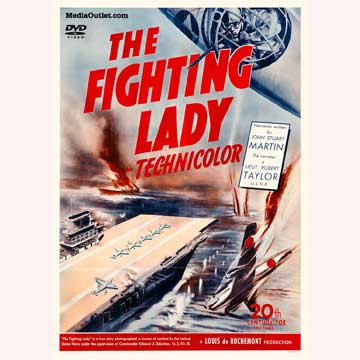
June 7, 1942: World War II: The Pacific
War (The Asia-Pacific War, The Pacific Theater Of World War II):
The Pacific Ocean Theater Of World War II: The Battle Of Midway:
-- June 7: -- With the sinkings of the American naval vessels the
USS Yorktown aircraft carrier and the destroyer USS Hamman, The
Battle of Midway ends in American victory. The Battle of Midway,
June 4-7, 1942, began as Japanese Admiral Chuichi Nagumo ordered a
strike on Midway Island by much of the Imperial Japanese Navy. The
Battle of Midway was a decisive naval battle in the Pacific
Theater of World War II which occurred between 4 and 7 June 1942,
only six months after Japan's attack on Pearl Harbor and one month
after the historic Battle Of The Coral Sea. The United States Navy
under Admirals Chester Nimitz, Frank Jack Fletcher, and Raymond A.
Spruance defeated an attacking fleet of the Imperial Japanese Navy
under Admirals Isoroku Yamamoto, Chuichi Nagumo, and Nobutake
Kondo near Midway Atoll, inflicting devastating damage on the
Japanese fleet that proved irreparable. Military historian John
Keegan called it "the most stunning and decisive blow in the
history of naval warfare.". The Japanese operation, like the
earlier attack on Pearl Harbor, sought to eliminate the United
States as a strategic power in the Pacific, thereby giving Japan a
free hand in establishing its Greater East Asia Co-Prosperity
Sphere. The Japanese hoped another demoralizing defeat would force
the U.S. to capitulate in the Pacific War and thus ensure Japanese
dominance in the Pacific. Luring the American aircraft carriers
into a trap and occupying Midway was part of an overall "barrier"
strategy to extend Japan's defensive perimeter, in response to the
Doolittle air raid on Tokyo. This operation was also considered
preparatory for further attacks against Fiji, Samoa, and Hawaii
itself. The plan was handicapped by faulty Japanese assumptions of
the American reaction and poor initial dispositions. Most
significantly, American cryptographers at Station HYPO in Hawaii
were able to determine from decryptions of the Japanese JN-25
naval communications cypher the date and location of the planned
attack, enabling the forewarned U.S. Navy to prepare its own
ambush. There were seven aircraft carriers involved in the battle,
and all four of Japan's large fleet carriers - Akagi, Kaga, Soryu
and Hiryu, part of the six-carrier force that had attacked Pearl
Harbor six months earlier - and the heavy cruiser Mikuma were
sunk, while the U.S. lost only the carrier USS Yorktown and the
destroyer USS Hammann. After Midway and the exhausting attrition
of the Solomon Islands campaign, Japan's capacity to replace its
losses in materiel (particularly aircraft carriers) and men
(especially well-trained pilots and maintenance crewmen) rapidly
became insufficient to cope with mounting casualties, while the
United States' massive industrial and training capabilities made
losses far easier to replace. The Battle of Midway, along with the
Guadalcanal Campaign, is widely considered the turning point in
the Pacific War. On Sale @ 15% Off Discount Till Midnight PT!
https://store.earthstation1.com/the-fighting-lady-1944-edward-steichen-uss-yorktown-wwii1944.html
Today's
EarthStation1.com 15% Off Commemorative Memorial Title: Alaska At
War: Japanese WWII Invasion Of Alaska DVD, Download, USB
Today, May 7, 2026
June 7, 1942: World War II: The Pacific
War (The Asia-Pacific War, The Pacific Theater Of World War II):
The Pacific Ocean Theater Of World War II: The American Theater Of
World War II (The Americas Theater Of World War II): The Aleutian
Islands Campaign (The Alaska Campaign) (Japanese: Aryushan Homen
No Tatakai, "The Battle Of The Aleutians"): The Battle
Of Dutch Harbor: -- Imperial Japanese soldiers begin occupying the
American islands of Attu and Kiska, in the Aleutian Islands off
Alaska. The Aleutian Islands Campaign began with the bombing
Unalaska Island at the beginning of The Battle of Dutch Harbor,
which took place on 3-4 June 1942, when the Imperial Japanese Navy
launched two air raids from an aircraft carrier task force,
consisting of the carriers Ryujo and Jun'yo under the command of
Admiral Kakuji Kakuta, on the Dutch Harbor Naval Operating Base
and U.S. Army Fort Mears at Dutch Harbor on Amaknak Island, during
the Aleutian Islands Campaign of World War II. The Aleutian
Islands Campaign was a military campaign conducted by the United
States and Japan in the Aleutian Islands, part of the Alaska
Territory, in the American theater and the Pacific theater of
World War II starting on 3 June 1942. A small Japanese force
occupied the islands of Attu and Kiska, where the remoteness of
the islands and the challenges of weather and terrain delayed a
larger U.S.-Canadian force sent to eject them for nearly a year.
The islands' strategic value was their ability to control Pacific
transportation routes, which is why U.S. General Billy Mitchell
stated to the U.S. Congress in 1935, "I believe that in the
future, whoever holds Alaska will hold the world. I think it is
the most important strategic place in the world.". The
Japanese reasoned that control of the Aleutians would prevent a
possible U.S. attack across the Northern Pacific. Similarly, the
U.S. feared that the islands would be used as bases from which to
launch aerial assaults against the West Coast. A battle to reclaim
Attu was launched on May 11, 1943 and completed following a final
Japanese banzai charge on May 29. On August 15, 1943 an invasion
force landed on Kiska in the wake of a sustained three-week
barrage, only to discover that the Japanese had withdrawn from the
island on July 29. The campaign is known as the "Forgotten
Battle", due to its being overshadowed by the simultaneous
Guadalcanal Campaign. In the past, many Western military
historians believed it was a diversionary or feint attack during
the Battle of Midway, meant to draw out the U.S. Pacific Fleet
from Midway Atoll, as it was launched simultaneously under the
same commander, Isoroku Yamamoto. However, historians Jonathan
Parshall and Anthony Tully have argued against this
interpretation, stating that the Japanese invaded the Aleutians to
protect their northern flank, and did not intend it as a
diversion. On Sale @ 15% Off Discount Till Midnight PT!
https://store.earthstation1.com/alaska-at-war-dvd-wwii-invasion-by-japan.html
Today's
EarthStation1.com 15% Off Commemorative Memorial Title: Pursuit To
The Rhine The Liberation Of Western Europe MP4 Download DVD
Today, May 7, 2026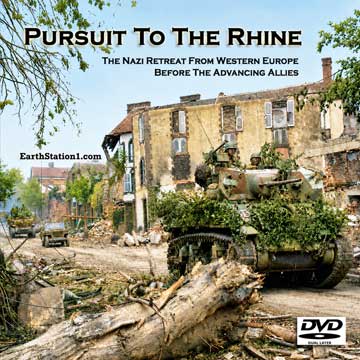
June 7, 1944: The European Civil War:
World War II: The Second European War (The European Theater Of
World War II): The Western Front Of World War II: The Liberation
Of France: Operation Overlord (The Battle Of Normandy, The
Normandy Campaign): D-Day (The D-Day Landings, The Normandy
Landings): The Battle For Caen: Operation Perch: -- Operation
Perch begins, the British offensive during the early stages of The
Battle Of Normandy that was intended to encircle and seize the
German occupied city of Caen, a D-Day objective for the British
3rd Infantry Division in the early phases of Operation Overlord.
Operation Perch was to begin immediately after the British beach
landings with an advance to the south-east of Caen by XXX Corps.
Three days after the invasion the city was still in German hands
and the operation was amended. The operation was expanded to
include I Corps for a pincer attack on Caen. On the next day, XXX
Corps in the west pushed south to Tilly-sur-Seulles, which was
occupied by the Panzer-Lehr Division; the village was captured and
re-captured several times. I Corps began the eastern thrust two
days later from the Orne bridgehead, which had been secured in
Operation Tonga on D-Day. I Corps was also delayed by constant
counter-attacks of the 21st Panzer Division. With mounting
casualties and no sign of a German collapse, the offensive east of
Caen was suspended on June 13. Further west in the US First Army
area, American attacks forced a gap in the German defences. Part
of the 7th Armoured Division was diverted from Tilly-sur-Seulles,
to advance through the gap in a flanking manoeuvre and force the
Panzer Lehr Division to fall back, to avoid encirclement. On June
14, 1944, after several failed attempts, the British Army
abandoned Operation Perch after two days of battle including the
Battle of Villers-Bocage. The 7th Armoured Division was ordered to
withdraw towards Caumont; plans were made to resume the offensive
once the 7th Armoured Division had been reinforced but the plans
came to nothing when a storm in the English Channel seriously
delayed the landing of supplies and reinforcements. The battle is
controversial because many historians and writers have concluded
that it was failures by British divisional and corps commanders
that squandered an opportunity to capture Caen, rather than the
Germans achieving a defensive success. To resist the offensive,
the Germans had committed their most powerful armoured reserves,
which deprived them of the fighting power for a counter-offensive
and forfeited the initiative to the Allies. On Sale @ 15% Off
Discount Till Midnight PT!
https://store.earthstation1.com/pursuit-to-the-rhine-the-liberation-of-western-europe-mp4-download-dv4.html
Today's
EarthStation1.com 15% Off Commemorative Memorial Title: D-Day:
Assault On Fortress Europe The War Files DVD, MP4, USB Drive
Today, May 7, 2026
June 7, 1944: The European Civil War:
World War II: The Second European War (The European Theater Of
World War II): The Western Front Of World War II: Operation
Overlord (The Battle Of Normandy): D-Day (The D-Day Landings, The
Normandy Landings): D-Day Plus One: -- The Ardenne Abbey Massacre:
Soldiers of the 12th SS Panzer Division Hitlerjugend begin to
massacre 23 Canadian prisoners of war over the course of several
days and weeks in a garden at Ardenne Abbey, a monastery of the
Catholic religious order of Premonstratensians in
Saint-Germain-la-Blanche-Herbe, near Caen, France. This was part
of the Normandy Massacres, a series of scattered killings during
which up to 156 Canadian prisoners of war were murdered by
soldiers of the 12th SS Panzer Division during the Battle of
Normandy. The perpetrators of the massacre were known for their
fanaticism, the majority having been drawn from the Hitlerjugend
(Hitler Youth). On Sale @ 15% Off Discount Till Midnight PT!
https://store.earthstation1.com/dday-assault-on-fortress-europe--the-war-files-dvd.html
Today's
EarthStation1.com 15% Off Commemorative Memorial Title: WPIX at
40! (1988) New York City's TV Channel 11 DVD, Download, USB
Today, May 7, 2026
June 7, 1947: #BOTD: #HBD: Thurman
Munson, American professional baseball catcher who played 11
seasons in Major League Baseball (MLB) with the New York Yankees,
from 1969 until his death (d. August 2, 1979) is #born Thurman Lee
Munson in Akron, Ohio. A seven-time All-Star, Munson had a career
batting average of .292 with 113 home runs and 701 runs batted in
(RBIs). Known for his outstanding fielding, he won the Gold Glove
Award in three consecutive years (1973-75). Munson was selected as
the fourth pick of the 1968 MLB draft and was named as the catcher
on the 1968 College Baseball All-American Team. Munson hit over
.300 in his two seasons in the minor leagues, establishing himself
as a top prospect. He became the Yankees' starting catcher late in
the 1969 season, and after his first complete season in 1970, in
which he batted .302, he was voted American League (AL) Rookie of
the Year. Considered the "heart and soul" of the
Yankees, Munson was named captain of the Yankees in 1976, the
team's first since Lou Gehrig. That same year, he won the AL Most
Valuable Player (MVP) Award. As captain, Munson helped lead the
Yankees to three consecutive World Series appearances from 1976 to
1978, winning championships in the latter two years. He is the
first player in baseball history to be named a College Baseball
All-American and then in MLB win a Rookie of the Year Award, MVP
Award, Gold Glove Award, and World Series championship. He is also
the only catcher in MLB postseason history to record at least a
.300+ batting average (.357), 20 RBIs (22), and 20 defensive
caught stealings (24). On August 2, 1979, Munson died in a crash
while practicing landings in his aircraft at Akron-Canton Airport
in Green, Ohio, aged 32. His flight instructor Dave Hall spoke
well of his ability: "From the onset to completion of
training Mr. Munson displayed well above average skills and
judgment as a pilot." However, in a 2022 tribute piece for
his Countdown with Keith Olbermann podcast, sports commentator
Keith Olbermann recalled that four months before Munson's death,
he was told that Yankee executives were terrified Munson was "not
as good a pilot as he thinks he is" and that they were
attempting to get owner George Steinbrenner to trade him to
Cleveland to get him to stop flying, afraid that he might "wind
up killing himself." Munson is buried at Canton's Sunset
Hills Burial Park. The Yankees honored him by immediately retiring
his uniform 15, and dedicating a plaque to him in Monument Park.
On Sale @ 15% Off Discount Till Midnight PT!
https://store.earthstation1.com/wpix-at-40-channel-11-nyc-1988-tv-retrospec40111988.html
Today's
EarthStation1.com 15% Off Commemorative Memorial Title:
Czechoslovakia: The Long Wait For Revolution DVD, Download, USB
Drive
Today, May 7, 2026
June 7, 1948: The Aftermath Of World War
II: The Cold War: The Eastern Bloc (The Communist Bloc, The
Socialist Bloc, The Soviet Bloc): Czechoslovakia: The Ninth-Of-May
Constitution: The 1948 Czechoslovak Coup D'Etat: -- Edvard Benes
resigns as President of Czechoslovakia rather than signing the
Ninth-of-May Constitution, making his nation a Communist state.
Edvard Benes, Czech academic and politician, 2nd and twice
President of Czechoslovakia (1935-1938 and 1945-1948) (d. 1948)
was born May 28, 1884. Sometimes anglicised to Edward Benesh or
Eduard Benes, Dr. Edvard Benes was also Minister of Foreign
Affairs (1918-1935), 4th Prime Minister of Czechoslovakia
(1921-1922) and the President of Czechoslovakia in exile
(1939-1945). A member of the Czechoslovak National Social Party,
he was known as a skilled diplomat. He opposed Nazi Germany's
claim to the German-speaking Sudetenland in 1938. In October 1938,
Italy, France and the United Kingdom signed the Munich Agreement,
which allowed for the annexation and the military occupation of
the Sudetenland by Germany. Czechoslovakia was not consulted.
Benes agreed, despite opposition from within his country, after
France and the United Kingdom warned that they would remain
neutral, despite their previous promises, in a war between Germany
and Czechoslovakia. On October 5, 1938, Benes resigned and fled
abroad amid threats from Adolf Hitler and was replaced by Emil
Hacha. In March 1939, Hacha's government was bullied into allowing
the German occupation of the remaining Czech territory, as
Slovakia had already declared its nominal independence. Having
served as the President of Czechoslovakia in exile during World
War II, he returned to Czechoslovakia after Prague Uprising
ejected the Nazi German forces remaining in the country and Benes
resumed his former position as President. He was unanimously
confirmed in office the National Assembly on 28 October 1945.
Article 58.5 of the Constitution said, "The former president
shall stay in his or her function till the new president shall be
elected". On 19 June 1946, Benes was formally elected to his
second term as President. On May 9, 1948, Czechoslovakia's
Ninth-of-May Constitution came into effect, the second
constitution of Czechoslovakia, in force from 1948 to 1960. It
came into force shortly after the communist seizure of power in
the country and the Third Republic ended on February 25, 1948. On
June 7, 1948, Benes refused to sign it and resigned, and his
nation thereby became a de facto Communist state.. The Communist
Party of Czechoslovakia, with Soviet backing, assumed undisputed
control over the government of Czechoslovakia on February 22, 1948
during the 1948 Czechoslovak Coup, marking the onset of four
decades of communist rule in the country. On Sale @ 15% Off
Discount Till Midnight PT!
https://store.earthstation1.com/czechoslovakia-the-long-wait-for-spring-dvd-1988-cold1988.html
Today's
EarthStation1.com 15% Off Commemorative Memorial Title: Breaking
The Code 1996 Alan Turing Derek Jacobi MP4 Video Download DVD
Today, May 7, 2026
June 7, 1954: #DOTD: #RIP: Alan Turing,
English computer scientist, mathematician, logician, cryptanalyst,
philosopher and theoretical biologist (b. June 23, 1912) #dies at
his home at Wilmslow, Cheshire, England at the age of 41. On June
8, Alan Mathison Turing OBE FRS's housekeeper found him dead; he
had died the previous day. Cyanide poisoning was established as
the cause of death. When his body was discovered, an apple lay
half-eaten beside his bed, and although the apple was not tested
for cyanide, it was speculated that this was the means by which
Turing had consumed a fatal dose. An inquest determined that he
had committed suicide. Andrew Hodges and another biographer, David
Leavitt, have both speculated that Turing was re-enacting a scene
from the Walt Disney film Snow White and the Seven Dwarfs (1937),
his favourite fairy tale. Both men noted that (in Leavitt's words)
he took "an especially keen pleasure in the scene where the
Wicked Queen immerses her apple in the poisonous brew".
Turing's remains were cremated at Woking Crematorium on June 12,
1954, and his ashes were scattered in the gardens of the
crematorium, just as his father's had been. Alan Turing was born
Alan Mathison Turing in Maida Vale, London, England. Turing was
highly influential in the development of theoretical computer
science, providing a formalisation of the concepts of algorithm
and computation with the Turing machine, which can be considered a
model of a general purpose computer. Turing is widely considered
to be the father of theoretical computer science and artificial
intelligence. During the Second World War, he worked for the
Government Code and Cypher School (GCAndCS) at Bletchley Park,
Britain' codebreaking centre that produced Ultra intelligence. For
a time he led Hut 8, the section which was responsible for German
naval cryptanalysis. Here he devised a number of techniques for
speeding the breaking of German ciphers, including improvements to
the pre-war Polish bombe method, an electromechanical machine that
could find settings for the Enigma machine. Turing played a
pivotal role in cracking intercepted coded messages that enabled
the Allies to defeat the Nazis in many crucial engagements,
including the Battle of the Atlantic, and in so doing helped win
the war. On Sale @ 15% Off Discount Till Midnight PT!
https://store.earthstation1.com/breaking-the-code-1996-alan-turing-derek-jacobi-mp4-video-downloa19964.html
Today's
EarthStation1.com 15% Off Commemorative Memorial Title: Lux Radio
Theatre w/ Cecil B. DeMille MP3 Set DVD, Download, USB Drive
Today, May 7, 2026
June 7, 1955: Aesthetics: Performing
Arts: Finales: American Radio Finales: -- Lux Radio Theatre signs
off the air permanently. The show launched in New York in 1934,
and featured radio adaptations of Broadway shows and popular
films. Lux Radio Theatre, sometimes spelled Lux Radio Theater, a
classic radio anthology series, was broadcast on the NBC Blue
Network (1934-35) (owned by the National Broadcasting Company,
later predecessor of American Broadcasting Company [ABC] in 1943
/1945); CBS Radio network (Columbia Broadcasting System)
(1935-54), and NBC Radio (1954-55). Initially, the series adapted
Broadway plays during its first two seasons before it began
adapting films. These hour-long radio programs were performed live
before studio audiences. The series became the most popular
dramatic anthology series on radio, broadcast for more than 20
years and continued on television as the Lux Video Theatre through
most of the 1950s. The primary sponsor of the show was Unilever
through its Lux Soap brand. Broadcasting from New York, the series
premiered at 2:30 p.m., October 14, 1934, on the NBC Blue Network
with a production of Seventh Heaven starring Miriam Hopkins and
John Boles in a full-hour adaptation of the 1922-24 Broadway
production by Austin Strong. The host was the show's fictional
producer, Douglass Garrick (portrayed by John Anthony). Doris
Dagmar played another fictional character, Peggy Winthrop, who
delivered the Lux commercials. Each show featured a scripted
session with Garrick talking to the lead actors. Anthony appeared
as Garrick from the premiere 1934 episode until June 30, 1935.
Garrick was portrayed by Albert Hayes from July 29, 1935, to May
25, 1936, when the show moved to the West Coast. Famed studio
executive and film producer / director Cecil B. DeMille,
(1881-1959), took over as the host on June 1, 1936, continuing
until January 22, 1945. That initial episode with DeMille featured
stars Marlene Dietrich and Clark Gable in The Legionnaire and the
Lady. On several occasions, usually when he was out of town, he
was temporarily replaced by various celebrities, including Leslie
Howard and Edward Arnold. Lux Radio Theatre strove to feature as
many of the original stars of the original stage and film
productions as possible, usually paying them 5K USD an appearance.
In 1936, when sponsor manufacturer Lever Brothers (who made Lux
brand soap and detergent) moved the show from New York City to
Hollywood, the program began to emphasize adaptations of films
rather than plays. The first Lux film adaptation was The
Legionnaire and the Lady, with Marlene Dietrich and Clark Gable,
based on the film Morocco. That was followed by a Lux adaptation
of The Thin Man, featuring the movie's actual stars, Myrna Loy and
William Powell. On Sale @ 15% Off Discount Till Midnight PT!
https://store.earthstation1.com/complete-lux-radio-theatre-2-dual-layer-mp3-dvds-cecil-b-demil23.html
Today's
EarthStation1.com 15% Off Commemorative Memorial Title: Bobby
Kennedy: In His Own Words DVD, Video Download, USB Flash Drive
Today, May 7, 2026
June 7, 1966: South Africa: The History
Of South Africa: Segregation: Racial Segregation: Apartheid
(Racial Segregation In South Africa): -- New York Senator Robert
F. Kennedy becomes one of the first major American politicians to
take a public stand against South African Apartheid when he
delivers an address to the National Union Of South African
Students in New York City. He began the speech with words that
were on the face of it about South Africa, but as the speech went
on, it was clear he was speaking about America, too: "I came
here because of my deep interest and affection for a land settled
by the Dutch in the mid-seventeenth century, then taken over by
the British, and at last independent; a land in which the native
inhabitants were at first subdued, but relations with whom remain
a problem to this day; a land which defined itself on a hostile
frontier; a land which has tamed rich natural resources through
the energetic application of modern technology; a land which once
imported slaves, and now must struggle to wipe out the last traces
of that former bondage. I refer, of course, to the United States
of America. This is a Day of Affirmation, a celebration of
liberty. We stand here in the name of freedom." On Sale @ 15%
Off Discount Till Midnight PT!
https://store.earthstation1.com/bobby-kennedy-in-his-own-words-dvd.html
Today's
EarthStation1.com 15% Off Commemorative Memorial Title: The
Six-Day War: The 1967 Arab-Israeli War MP4 Video Download DVD
Today, May 7, 2026
June 7, 1967: The Cold War: The Arab Cold
War (July 23, 1952 - February 11, 1979): The Arab-Israeli
Conflict: The Israeli-Palestinian Conflict: The Six-Day War
((Hebrew: Milhemet Seset HaYamim; Arabic: An-Naksah, "The
Setback", Harb 1967, "The War Of 1967") (The June
War, The 1967 Arab-Israeli War, The Third Arab-Israeli War): --
Israeli soldiers enter Jerusalem. The Six-Day War (Hebrew:
Milhemet Sheshet Ha Yamim; Arabic: an-Naksah, "The Setback"
or Harb 1967, "War of 1967"), also known as the June
War, 1967 Arab-Israeli War, or Third Arab-Israeli War, was fought
between 5 and 10 June 1967 by Israel and the neighboring states of
Egypt (known at the time as the United Arab Republic), Jordan, and
Syria. Relations between Israel and its neighbours had never fully
normalised following the 1948 Arab-Israeli War. In 1956 Israel
invaded the Egyptian Sinai, with one of its objectives being the
reopening of the Straits of Tiran which Egypt had blocked to
Israeli shipping since 1950. Israel was subsequently forced to
withdraw, but won a guarantee that the Straits of Tiran would
remain open. While the United Nations Emergency Force was deployed
along the border, there was no demilitarisation agreement. In the
period leading up to June 1967, tensions became dangerously
heightened. Israel reiterated its post-1956 position that the
closure of the straits of Tiran to its shipping would be a casus
belli. In May Egyptian President Gamal Abdel Nasser announced that
the straits would be closed to Israeli vessels and then mobilised
its Egyptian forces along its border with Israel. On 5 June Israel
launched what it claimed were a series of preemptive airstrikes
against Egyptian airfields. Claims and counterclaims relating to
this series of events are one of a number of controversies
relating to the conflict. The Egyptians were caught by surprise,
and nearly the entire Egyptian air force was destroyed with few
Israeli losses, giving the Israelis air supremacy. Simultaneously,
the Israelis launched a ground offensive into the Gaza Strip and
the Sinai, which again caught the Egyptians by surprise. After
some initial resistance, Egyptian leader Gamal Abdel Nasser
ordered the evacuation of the Sinai. Israeli forces rushed
westward in pursuit of the Egyptians, inflicted heavy losses, and
conquered the Sinai. Nasser induced Syria and Jordan to begin
attacks on Israel by using the initially confused situation to
claim that Egypt had repelled the Israeli air strike. Israeli
counterattacks resulted in the seizure of East Jerusalem as well
as the West Bank from the Jordanians, while Israel's retaliation
against Syria resulted in its occupation of the Golan Heights. On
11 June, a ceasefire was signed. In the aftermath of the war,
Israel had crippled the Egyptian, Syrian and Jordanian militaries,
having killed over 20,000 troops while only losing fewer than
1,000 of their own. The Israeli success was the result of a
well-played and prepared strategy, the poor leadership of the Arab
states and their poor military leadership and strategy. Israel
seized the Gaza Strip and the Sinai Peninsula from Egypt, the West
Bank from Jordan and the Golan Heights from Syria. Israel's
international standing greatly improved in the years after and
their victory humiliated Egypt, Jordan and Syria, leading Nasser
to resign in shame; he was later reinstated after protests in
Egypt against his resignation occurred. The speed and ease of
Israel's victory would later lead to a dangerous overconfidence
within the ranks of the Israel Defense Forces (IDF), contributing
to initial Arab successes in the subsequent 1973 Yom Kippur War,
although ultimately Israeli forces were successful and won over
the Arab militaries. The displacement of civilian populations
resulting from the war would have long-term consequences, as
300,000 Palestinians fled the West Bank and about 100,000 Syrians
left the Golan Heights to become refugees. Across the Arab world,
Jewish minority communities fled or were expelled, with refugees
going mainly to Israel or Europe. On Sale @ 15% Off Discount Till
Midnight PT!
https://store.earthstation1.com/the-sixday-war-the-1967-arabisraeli-war-mp4-video-downloa19674.html
Today's
EarthStation1.com 15% Off Commemorative Memorial Title: War Jets:
The General Dynamics F-16 Fighting Falcon MP4 2 DVD Set
Today, May 7, 2026
June 7, 1981: The Aftermath Of World War
II: The Cold War: The Iran-Iraq War: Operation Opera (Operation
Babylon): -- The Israeli Air Force destroys Iraq's Osiraq nuclear
reactor with a surprise air strike by Israeli Air Force F-16A
fighter aircraft, with an escort of F-15As, which destroyed the
Iraqi nuclear reactor while under construction 17 kilometers (10.5
miles) southeast of Baghdad. Ten Iraqi soldiers and one French
civilian were killed in the attack, which took place about three
weeks before the elections for the Knesset. The operation came
after Iran's unsuccessful Operation Scorch Sword operation had
caused minor damage to the same nuclear facility the previous
year, the damage having been subsequently repaired by French
technicians. Operation Opera, and related Israeli government
statements following it, established the Begin Doctrine, which
explicitly stated the strike was not an anomaly, but instead "a
precedent for every future government in Israel." Israel's
counter-proliferation preventive strike added another dimension to
their existing policy of deliberate ambiguity, as it related to
the nuclear capability of other states in the region. In 1976,
Iraq purchased an "Osiris"-class nuclear reactor from
France. While Iraq and France maintained that the reactor, named
Osirak by the French, was intended for peaceful scientific
research, the Israelis viewed the reactor with suspicion, and said
that it was designed to make nuclear weapons. The attack was
strongly criticized around the world, including in the United
States, and Israel was rebuked by the United Nations Security
Council and General Assembly in two separate resolutions. Media
reactions were no less negative: "Israel's sneak attack ...
was an act of inexcusable and short-sighted aggression",
wrote the New York Times, while the Los Angeles Times called it
"state-sponsored terrorism". The destruction of Osirak
has been cited as an example of a preventive strike in
contemporary scholarship on international law. The exact
efficiency of the attack is debated by historians - it took Iraq
off the brink of nuclear capability but drove its weapons program
underground and cemented Saddam Hussein's ambitions of acquiring
nuclear weapons. Despite international opprobrium, Operation Opera
would help to secure the successful liberation of Kuwait and
diminished the risk of terrorist groups in the region obtaining
nuclear weapons, though it also heightened preexisting tensions
with Iraq, making a future confrontation between the two powers
more likely. On Sale @ 15% Off Discount Till Midnight PT!
https://store.earthstation1.com/war-jets-the-f16-fighting-falcon-d16.html
Today's
EarthStation1.com #OnThisDay Commemorative Memorial Title: Outer
Space Films 3 Project Apollo Reaching For The Moon DVD, MP4, USB
Today, May 7, 2026 June 7, 2024: #DOTD: #RIP: William
Anders, American United States Air Force (USAF) major general,
electrical engineer, nuclear engineer, NASA astronaut, and
businessman, who was a member of the crew of Apollo 8, the first
three people to leave low-Earth orbit and travel to the Moon, and
who during one of the mission's lunar orbits took the iconic
Earthrise photograph, one of the most influential environmental
photograph ever taken (b. October 17, 1933) #dies aged 90 while
flying the vintage Beechcraft T-34 Mentor aircraft registered to
him near the San Juan Islands, Washington. A video of the crash
surfaced on social media. The aircraft crashed into the waters of
north Puget Sound between Jones Island and Orcas Island and was
seen by witnesses as going down into a small channel between the
two islands, then sinking after catching fire. After witnesses
reported seeing the plane take a nosedive and crash in the water,
a search was launched by the U.S. Coast Guard and the San Juan
County Sheriff's Department. Later that day, Anders' son, Greg,
confirmed the death of his father and that his body had been
recovered. Beginning with his Air Force career, Anders had logged
over 8,000 flight hours. He is buried at The United States Naval
Academy Cemetery in Annapolis, Maryland. William Anders was born
William Alison Anders in British Hong Kong, the son of Arthur
Ferdinand Anders (1903-2000), a United States Navy lieutenant, and
his wife, Muriel A. Anders (nee Adams; 1911-1990). Along with
fellow astronauts Frank Borman and Jim Lovell, William Anders
circled the Moon ten times, and broadcast live images and
commentary back to Earth, including the Apollo 8 Christmas Eve
Genesis Reading, when during their ninth orbit of the Moon
astronauts Bill Anders, Jim Lovell, and Frank Borman recited
verses 1 through 10 of the Genesis creation narrative from the
King James Bible, with Anders reading verses 1-4, Lovell verses
5-8, and Borman reading verses 9 and 10. One in four people on
Earth -- roughly a billion people spread among 64 countries --
listened to the reading. Within 24 hours, recorded broadcasts of
the address from the moon reached people in another 30 countries.
Audiences in North and South America as well as Europe tuned in
live thanks to the recently launched Intelsat 3 satellite. COMSAT
put the satellite into operation a week ahead of schedule so that
international audiences could follow the flight. Madalyn Murray
O'Hair, founder of American Atheists, responded by suing the
United States government, alleging violations of the First
Amendment. The suit was filed in the United States District Court
for the Western District of Texas. It was submitted to a
three-judge panel, which concluded that the case was not a
three-judge matter, and dismissed the case for failure to state a
cause of action. The direct appeal to the Supreme Court was
dismissed for lack of jurisdiction. Another appeal was heard
before the Fifth Circuit Court of Appeals, which affirmed the
trial court's dismissal per curiam (an unsigned opinion, one that
is not authored by or attributed to a specific judge, but rather
ascribed to the entire court or panel of judges who heard the
case). The Supreme Court declined to review the case. A 1955
graduate of the United States Naval Academy, Anders was
commissioned a second lieutenant in the USAF the same year and
became a fighter pilot flying Northrop F-89 Scorpions equipped
with AIR-2A nuclear-tipped air-to-air rockets. He hoped to study
aeronautical engineering through the Air Force Institute of
Technology (AFIT) of Air University, but the Aircraft Nuclear
Propulsion program was ongoing, and he had to study nuclear
engineering instead. He graduated from the AFIT in 1962 with a
Master of Science degree in nuclear engineering and was sent to
the Air Force Weapons Laboratory, where he managed the technical
aspects of the USAF nuclear power reactor programs. Anders was the
executive secretary of the National Aeronautics and Space Council
from 1969 to 1973, a commissioner of the United States Atomic
Energy Commission from 1973 to 1975, and chairman of the Nuclear
Regulatory Commission from 1975 to 1976. He then became the United
States Ambassador to Norway from 1976 to 1977. In September 1977,
he joined General Electric (GE) as the vice president and general
manager of its Nuclear Products Division and became the general
manager of the GE Aircraft Equipment Division in 1980. He left GE
to join Textron as executive vice president for aerospace, and two
years later became senior executive vice president for operations.
During his time in the Civil Service, he remained a USAF reserve
officer and retained his active flight status. He retired from the
reserve as a major general in 1988. In 1990, he became vice
chairman of General Dynamics, and in 1991 its chairman and CEO. He
retired as CEO in 1993 and as chairman in 1994.
https://store.earthstation1.com/outer-space-films-3-project-apollo-reaching-for-the-moon-dv3.html
June 7, 2024: #DOTD: #RIP: William
Anders, American United States Air Force (USAF) major general,
electrical engineer, nuclear engineer, NASA astronaut, and
businessman, who was a member of the crew of Apollo 8, the first
three people to leave low-Earth orbit and travel to the Moon, and
who during one of the mission's lunar orbits took the iconic
Earthrise photograph, one of the most influential environmental
photograph ever taken (b. October 17, 1933) #dies aged 90 while
flying the vintage Beechcraft T-34 Mentor aircraft registered to
him near the San Juan Islands, Washington. A video of the crash
surfaced on social media. The aircraft crashed into the waters of
north Puget Sound between Jones Island and Orcas Island and was
seen by witnesses as going down into a small channel between the
two islands, then sinking after catching fire. After witnesses
reported seeing the plane take a nosedive and crash in the water,
a search was launched by the U.S. Coast Guard and the San Juan
County Sheriff's Department. Later that day, Anders' son, Greg,
confirmed the death of his father and that his body had been
recovered. Beginning with his Air Force career, Anders had logged
over 8,000 flight hours. He is buried at The United States Naval
Academy Cemetery in Annapolis, Maryland. William Anders was born
William Alison Anders in British Hong Kong, the son of Arthur
Ferdinand Anders (1903-2000), a United States Navy lieutenant, and
his wife, Muriel A. Anders (nee Adams; 1911-1990). Along with
fellow astronauts Frank Borman and Jim Lovell, William Anders
circled the Moon ten times, and broadcast live images and
commentary back to Earth, including the Apollo 8 Christmas Eve
Genesis Reading, when during their ninth orbit of the Moon
astronauts Bill Anders, Jim Lovell, and Frank Borman recited
verses 1 through 10 of the Genesis creation narrative from the
King James Bible, with Anders reading verses 1-4, Lovell verses
5-8, and Borman reading verses 9 and 10. One in four people on
Earth -- roughly a billion people spread among 64 countries --
listened to the reading. Within 24 hours, recorded broadcasts of
the address from the moon reached people in another 30 countries.
Audiences in North and South America as well as Europe tuned in
live thanks to the recently launched Intelsat 3 satellite. COMSAT
put the satellite into operation a week ahead of schedule so that
international audiences could follow the flight. Madalyn Murray
O'Hair, founder of American Atheists, responded by suing the
United States government, alleging violations of the First
Amendment. The suit was filed in the United States District Court
for the Western District of Texas. It was submitted to a
three-judge panel, which concluded that the case was not a
three-judge matter, and dismissed the case for failure to state a
cause of action. The direct appeal to the Supreme Court was
dismissed for lack of jurisdiction. Another appeal was heard
before the Fifth Circuit Court of Appeals, which affirmed the
trial court's dismissal per curiam (an unsigned opinion, one that
is not authored by or attributed to a specific judge, but rather
ascribed to the entire court or panel of judges who heard the
case). The Supreme Court declined to review the case. A 1955
graduate of the United States Naval Academy, Anders was
commissioned a second lieutenant in the USAF the same year and
became a fighter pilot flying Northrop F-89 Scorpions equipped
with AIR-2A nuclear-tipped air-to-air rockets. He hoped to study
aeronautical engineering through the Air Force Institute of
Technology (AFIT) of Air University, but the Aircraft Nuclear
Propulsion program was ongoing, and he had to study nuclear
engineering instead. He graduated from the AFIT in 1962 with a
Master of Science degree in nuclear engineering and was sent to
the Air Force Weapons Laboratory, where he managed the technical
aspects of the USAF nuclear power reactor programs. Anders was the
executive secretary of the National Aeronautics and Space Council
from 1969 to 1973, a commissioner of the United States Atomic
Energy Commission from 1973 to 1975, and chairman of the Nuclear
Regulatory Commission from 1975 to 1976. He then became the United
States Ambassador to Norway from 1976 to 1977. In September 1977,
he joined General Electric (GE) as the vice president and general
manager of its Nuclear Products Division and became the general
manager of the GE Aircraft Equipment Division in 1980. He left GE
to join Textron as executive vice president for aerospace, and two
years later became senior executive vice president for operations.
During his time in the Civil Service, he remained a USAF reserve
officer and retained his active flight status. He retired from the
reserve as a major general in 1988. In 1990, he became vice
chairman of General Dynamics, and in 1991 its chairman and CEO. He
retired as CEO in 1993 and as chairman in 1994.
https://store.earthstation1.com/outer-space-films-3-project-apollo-reaching-for-the-moon-dv3.html
Today's
EarthStation1.com #OnThisDay Commemorative Memorial Title: Eyes On
The Prize II: America At The Racial Crossroads DVD MP4 USB
Today, May 7, 2026June 7, 1963: Assassinations Of Human
Rights Activists: Assassinations Of American Civil Rights
Activists: Civil Rights Movements: The American Civil Rights
Movement (1954-1968): Anti-Black Racism In The United States:
Assassination Attempts On Medgar Evers: -- Medgar Wiley Evers,
African American civil rights activist, Mississippi's field
secretary of the NAACP, and a Prince Hall Freemason (July 2, 1925
- June 12, 1963) is nearly run down by a car after he came out of
the NAACP office in Jackson, Mississippi; he was indeed
assassinated five days later, in front of his wife and children,
in the driveway of his home in Jackson, Mississippi, by a rifle
bullet from an ambush by white supremacist and Klansman from
Greenwood, Mississippi Byron De La Beckwith, a member of the White
Citizens' Council, a group was formed in 1954 to resist racial
integration of schools, civil rights activism and voter
registration reform, all efforts that Evers been an outspoken
leader of as a NAACP organizer. Medgar Evers had worked to
overturn segregation at the University of Mississippi, to end
segregation of public facilities, and to expand opportunities for
African Americans, including enforcement of voting rights. A World
War II veteran and college graduate, Evers became active in the
Civil Rights Movement in the 1950s. Following the 1954 ruling of
the United States Supreme Court in Brown v. Board of Education
that segregated public schools were unconstitutional, Evers
challenged the segregation of the state-supported public
University of Mississippi, applying to law school there. He also
worked for voting rights, economic opportunity, access to public
facilities, and other changes in the segregated society. Evers was
awarded the 1963 NAACP Spingarn Medal. As a veteran, Evers was
buried with full military honors at Arlington National Cemetery.
His murder and the resulting trials inspired civil rights
protests; his life and these events inspired numerous works of
art, music, and film. All-white juries failed to reach verdicts in
the first two trials of Beckwith due to hung juries in the 1960s.
On February 5, 1994, Beckwith (November 9, 1920 - January 21,
2001) was convicted in a new trial based on new evidence and
sentenced to life in prison. Seven years after being convicted of
killing Evers, De La Beckwith died in prison in 2001 at the age of
80. Medgar's widow Myrlie Evers became a noted activist in her own
right, serving as national chair of the NAACP. His brother Charles
Evers was the first African American mayor elected in Mississippi
in the post-Reconstruction era when he won in 1969 in Fayette.
https://store.earthstation1.com/eyes-on-the-prize-ii-dvd-set-4-discs-complete-2nd-seri42.html
Today's
EarthStation1.com #OnThisDay Commemorative Memorial Title: Anais
Observed: A Portrait Of A Woman As Artist DVD, MP4, USB Drive
Today, May 7, 2026June 7, 1980: #DOTD: #RIP: Henry Miller,
American novelist, essayist, painter and Rosicrucian, known for
breaking with existing literary forms and developing a new type of
semi-autobiographical novel that blended character study, social
criticism, philosophical reflection, stream of consciousness,
explicit language, sex, surrealist free association, and mysticism
(b. December 26, 1891) #dies of circulatory complications at his
home in Pacific Palisades, Los Angeles, California at the age of
88. His body was cremated and his ashes shared between his son
Tony and daughter Val. Tony has stated that he ultimately intends
to have his ashes mixed with those of his father and scattered in
Big Sur. He was born Henry Valentine Miller at his family's home,
450 East 85th Street, in the Yorkville section of Manhattan, New
York City. He was the son of Lutheran German parents, Louise Marie
(Neiting) and tailor Heinrich Miller. His most characteristic
works are Tropic of Cancer, Black Spring, Tropic of Capricorn and
The Rosy Crucifixion trilogy, which are based on his experiences
in New York and Paris (all of which were banned in the United
States until 1961). He also wrote travel memoirs and literary
criticism, and painted watercolors. One of books the books
directly from Miller's personal library is "The Rosicrucian
Cosmo-Conception, or, Mystic Christianity : an elementary treatise
upon man's past evolution, present constitution and future
development by Max Heindel (1911)". Meant as study guide for
the Rosicrucian Fellowship which Heindel founded in 1909, one
particular used copy made its way from Cambridge, U.K. and into
the hands of Henry Miller in Paris, who was entering a phase of
mystic enlightenment. On March 5, 1939, Henry wrote an inscription
inside the covers: "Sacred property of Henry Miller ... who
has just discovered that he has been a Rosicrucian all his life
... Paris 3/5/39."
https://store.earthstation1.com/anais-nin-observed-19741974.html
Today's
EarthStation1.com #OnThisDay Commemorative Memorial Title: In
Search Of Dracula 1975 Christopher Lee DVD, MP4 Download, USB
Drive
Today, May 7, 2026June 7, 2015: #DOTD: #RIP: Christopher
Lee, English character actor, singer, and author (b. May 27, 1922)
#dies of respiratory problems and heart failure at the Chelsea and
Westminster Hospital in London shortly after celebrating his 93rd
birthday. His remains were cremated, and his ashes were scattered
in Surrey Hills, England. Christopher Lee was born Christopher
Frank Carandini Lee in Belgravia, London, the son of Lieutenant
Colonel Geoffrey Trollope Lee (1879-1941) of the 60th King's Royal
Rifle Corps, and his wife, Countess Estelle Marie (nee Carandini
di Sarzano; 1889-1981).Lee's father fought in the Boer War and
First World War, and his mother was an Edwardian beauty who was
painted by Sir John Lavery, Oswald Birley, and Olive Snell, and
sculpted by Clare Sheridan. With a career spanning nearly 70
years, Sir Christopher Frank Carandini Lee CBE CStJ was well known
for portraying villains and became best known for his role as
Count Dracula in a sequence of Hammer Horror films. His other film
roles include Francisco Scaramanga in the James Bond film The Man
with the Golden Gun (1974), Saruman in The Lord of the Rings film
trilogy (2001-2003) and The Hobbit film trilogy (2012-2014), and
Count Dooku in the second and third films of the Star Wars prequel
trilogy (2002 and 2005).
https://store.earthstation1.com/in-search-of-dracula-1975-documentary-starring-christopher1975.html
Today's
EarthStation1.com #OnThisDay Commemorative Memorial Title: Oedipus
The King 1986 Sophocles Greek Tragedy DVD, Download, USB Drive
Today, May 7, 2026June 7, 1943: #BOTD: #HBD! Michael
Pennington, British actor, director and writer, popularly known as
Moff Jerjerrod in the original Star Wars trilogy film Return of
the Jedi, is #born Michael Vivian Fyfe Pennington in Cambridge,
Cambridgeshire, England. Together with director Michael Bogdanov,
he founded the English Shakespeare Company in 1986 and was its
Joint Artistic Director until 1992. He has written ten books,
directed in the UK, US, Romania and Japan, and is an Honorary
Associate Artist of the Royal Shakespeare Company. He played the
title role in Oedipus The King in the 1985 BBT TV production of
Sophocles' play.
https://store.earthstation1.com/oedipus-the-king-1986-sophocles-greek-tragedy1986.html
Today's
EarthStation1.com #OnThisDay Commemorative Memorial Title: Jack
Paar Late-Night TV Talk Shows DVD, MP4 Download, USB Flash Drive
Today, May 7, 2026June 7, 1984: #DOTD: #RIP: George Givot,
Russian Empire-born Ukrainian American comedian and actor on
Broadway and in vaudeville, movies, television and radio (b.
February 18, 1903) #dies of a heart attack in Palm Springs,
California, aged 81. His burial details unknown beyond that fact
that he was interred in somewhere in California. George Givot was
born George David Givot in Ekaterinoslav, Russian Empire (now
Dnipro, Ukraine). He was known for speaking in a comedic fake
Greek dialect and was styled the "Greek Ambassador of Good
Will". His best known movie role may be as the voice of Tony
in the Disney film Lady and the Tramp.
https://store.earthstation1.com/jack-paar-tv-shows-old-time-television-dual-layer-dvd.html
Today's
EarthStation1.com #OnThisDay Commemorative Memorial Title: Lum And
Abner Old Time Radio Series MP3 Set DVD, Download, USB Stick
Today, May 7, 2026June 7, 1978: #DOTD: #RIP: Norris Goff,
American comedian in radio and film best known for his portrayal
of Abner Peabody on the rural radio comedy series Lum and Abner
(b. May 30, 1906) #dies of a stroke at the age of 72 in Palm
Desert, California. He is buried at Desert Memorial Park in
Cathedral City, California. Nicknamed "Tuffy," Goff was
born in Cove, Arkansas, but soon moved to Mena, Arkansas where he
met his longtime friend and partner Chester Lauck (Lum) and
graduating from Mena High School in 1924. Despite their fame as
backwoodsmen, both actors graduated from the University of
Arkansas, where Goff became a member of the Sigma Chi fraternity.
Goff and his partner had experience as blackface entertainers, but
had also worked up a hillbilly skit based on their own life
experiences and friends. Performing on local radio, they soon
landed their own network series in 1931. In addition to playing
the role of the likable but naive, checker-playing Abner (who
worked with Lum at the "Jot 'Em down Store" in
fictitious Pine Ridge), Goff co-wrote the earliest episodes with
Lauck, and played many of the other recurring characters,
including postmaster Dick Huddleston (named after a real life
friend in Mena), con-man Squire Skimp, Mousy Gray, and in the
sentimental annual Christmas show, Doc Miller. Goff and Lauck also
guest starred as Lum and Abner on radio series such as Bing
Crosby's Kraft Music Hall; Goff also made a handful of solo
appearances, notably guesting as the father of Andy Devine in an
episode of The Jack Benny Program. Goff reprised his role as Abner
for seven films between 1940 and 1956. Unlike Lauck, who virtually
retired outside of playing Lum, Goff continued to make occasional
guest appearances on television in the 1960s. Goff appeared in one
episode apiece of two situation comedies with rural themes: Gomer
Pyle, U.S.M.C. (as Gomer's grandfather) and The Andy Griffith Show
(playing a local storekeeper). Upon retirement he lived in Palm
Springs, California. He died of a stroke at the age of 72 in Palm
Desert, California.
https://store.earthstation1.com/lum-and-abner-radio-mp3-dvd-complete-broadcast3.html
Today's
EarthStation1.com #OnThisDay Commemorative Memorial Title: To Be
Hamlet TV Documentary Series DVD, Video Download, USB Drive
Today, May 7, 2026June 7, 1893: #DOTD: #RIP: Edwin Booth,
American actor and theatre manager who toured throughout the
United States and the major capitals of Europe, performing
Shakespearean plays, considered by some theatrical historians as
the greatest American actor, and the world's greatest Prince
Hamlet, of the 19th centur (b. November 13, 1833) #dies in his
apartment in The Players clubhouse, a private social club he
founded, aged 59. He had had a small stroke in 1891, which
precipitated his decline; he suffered another stroke in April 1893
He was buried next to his first wife at Mount Auburn Cemetery in
Cambridge, Massachusetts. His bedroom in the club has been kept
untouched since his death; the oldest club in its original
clubhouse, the site was named a National Historic Landmark in
1962. Edwin Booth was born Edwin Thomas Booth in Bel Air,
Maryland, into the English-American theatrical Booth family. He
was the son of the famous actor, Junius Brutus Booth, an
Englishman, who named Edwin after Edwin Forrest and Thomas Flynn,
two of Junius' colleagues. He was the elder brother of John Wilkes
Booth, himself a successful actor who gained notoriety as the
assassin of President Lincoln, resulting in Edwin's achievements
often being overshadowed by this relationship. In 1869, he founded
Booth's Theatre in New York.
https://store.earthstation1.com/to-be-hamlet-dvd-2-part-1990-tv-documentary-s21990.html
Today's
EarthStation1.com #OnThisDay Commemorative Memorial Title:
Watergate: The Secret Story With Mike Wallace DVD MP4 USB Flash
Drive
Today, May 7, 2026June 7, 1909: #BOTD: #HBD! Peter Rodino,
American captain and Democratic politician who represented parts
of Newark, New Jersey and surrounding Essex and Hudson counties
for twenty terms from 1949 to 1989, best known as the chairman of
the House Judiciary Committee, where he oversaw the impeachment
process against Richard Nixon that eventually led to the
president's resignation (d. May 7, 2005) is #born Peter Wallace
Rodino Jr. in the North Ward of Newark, New Jersey. He was the
longest-serving member of the House of Representatives from New
Jersey until passed by Chris Smith in 2021. Peter Rodino died of
congestive heart failure at the age of 95 at his home in West
Orange, New Jersey. He lay in state at Seton Hall Law Chapel and
the funeral mass was celebrated at St. Lucy's Church in Newark.
Burial took place at Gate of Heaven Cemetery in East Hanover, New
Jersey.
https://store.earthstation1.com/watergate-the-secret-story-with-mike-wallace-dvd-mp4-usb-flash-driv4.html
Today's
EarthStation1.com #OnThisDay Commemorative Memorial Title: Civil
Props: The Douglas DC-3 DVD, MP4 Video Download, USB Drive
Today, May 7, 2026June 7, 1938: Aviation: The History Of
Aviation: The History Of Military Aviation: Maiden Flights: -- The
prototype Douglas DC-4E (NX18100, s/n 1601), an American
experimental military airliner, makes its first test flight,
without incident, from Clover Field in Santa Monica, California,
piloted by Carl Cover. Testing issues, however, delayed the
Approved Type Certificate until May 5, 1939. The DC-4E never
entered production due to being superseded by an entirely new
design, the Douglas DC-4/C-54, which proved very successful. Many
of the aircraft's innovative design features found their way into
the Nakajima G5N bomber after the single DC-4E prototype was sold
to a Japanese airline and clandestinely dismantled for study by
Nakajima at the behest of the Imperial Japanese Navy.
https://store.earthstation1.com/civil-props-the-douglas-dc3-dv3.html
Today's
EarthStation1.com #OnThisDay Commemorative Memorial Title: TV
Commercials: The Cable Age Classics Vol. 5 MP4 Video Download DVD
Today, May 7, 2026June 7, 1959: #BOTD: #HBD! Jim Burt,
American former professional football player who was a nose tackle
for the New York Giants and San Francisco 49ers of the National
Football League (NFL), is #born in Orchard Park, New York. James
P. Burt was a member of the Giants team that won Super Bowl XXI
and the 49ers team that won Super Bowl XXIV. He played college
football for the Miami Hurricanes. Burt played college football at
the University of Miami and was inducted into its sports hall of
fame. Raised in western New York state, he had dreamed of playing
for Syracuse, but they advised him to attend prep school first.
Burt joined the Giants as an undrafted free agent in 1981. He made
the Pro Bowl in 1986 and finished his career with 20 quarterback
sacks. Burt was respected throughout the league for his toughness
and determination, which resulted in him going from being an
undrafted rookie free agent to a Pro Bowler. He is also known for
knocking out 49ers quarterback Joe Montana on a pass in the 1986
NFC Divisional Playoff game. Montana's pass was picked off and
returned for a touchdown by Giants linebacker Lawrence Taylor. The
Giants won, 49-3, on their way to winning Super Bowl XXI. Although
many people often credit Harry Carson and Lawrence Taylor with
inventing the "Gatorade Shower" on coaches following
wins, Burt actually created it 42 years ago in 1984. The Giants
had finished 3-12-1 in 1983, last place in the NFC East and
third-worst in the 28-team league. As Carson stated in his 1987
book Point of Attack: The Defense Strikes Back, head coach Bill
Parcells was especially hard on Burt in practice. Parcells on the
Thursday before the game made Burt raise a 20 lb (9 kg) dumbbell
repeatedly off the ground in the weight room for 45 minutes to
simulate raising his arm powerfully out of his stance at the snap
of the ball. Burt exacted revenge on Parcells after a 37-13 home
win over the two-time defending NFC champion Washington Redskins
on October 28 by dousing him with a cooler of water. The following
season, the Giants dumped Gatorade on Parcells on October 20; it
was another home win over the Redskins, but after consecutive
losses to Dallas and Cincinnati. This became a tradition in
football, analogous to the champagne showers teams make in their
locker rooms after winning a championship. Burt was known to wear
an extremely tight jersey causing him to stick out in a crowd. To
protect against opposing players grabbing onto his jersey he opted
to wear one that was several sizes smaller. He would need
assistance pulling it on and off for each game, sometimes even
using scissors to cut off the jersey after the game. Burt battled
back problems with the New York Giants which ultimately caused
Parcells to announce his retirement in 1988. Burt, however, was
not ready to retire and instead joined the San Francisco 49ers for
the 1989 season. He won his second NFL title when they defeated
the Denver Broncos 55-10 in Super Bowl XXIV. During the 2006
season, Burt travelled to Dallas to give moral support to his
former tormentor Parcells who was then head coach of the Dallas
Cowboys. He also delivered a pre-game speech and stood on the
sidelines exulting Dallas' defensive players. Burt's son Jim Burt
Jr. followed in his father's footsteps and went to the University
of Miami, but played baseball rather than football for the
Hurricanes. Jim Jr. also played for a Connecticut-based collegiate
baseball team, the Torrington Twisters. Burt lived in Allendale,
New Jersey when he was playing for the Giants. He has since been a
resident of Saddle River, New Jersey. He played high school
football in Orchard Park, New York, a suburb of Buffalo and the
home of the Bills. His teammates at Orchard Park High School
included Craig Wolfley, later an offensive lineman with the
Pittsburgh Steelers, and Larry Pfohl, who found fame as
professional wrestler Lex Luger.
https://store.earthstation1.com/tv-commercials-the-cable-age-classics-vol-5-mp4-video-download-dvd.html
Today's
EarthStation1.com #OnThisDay Commemorative Memorial Title: The
Unforgettable Nat King Cole + Destination Freedom Docs DVD MP4 USB
Today, May 7, 2026June 7, 1996: #DOTD: Max Factor, Jr.,
American businessman and racist, president of the Max Factor
Cosmetics empire, son of Polish-Jewish businessman and cosmetics
pioneer Max Factor (b. August 18, 1904) #dies of congestive heart
failure in Los Angeles, California, aged 91. He is interred in
Hillside Memorial Park Cemetery in Culver City, California. Max
Factor, Jr. was #born Francis Factor in St. Louis, Missouri. Also
known as Max Factor Jr. and "Frank", his family moved to
Los Angeles, California, in 1908 where he began working in the
family business while still a boy. Because Max Factor was
recovering from being hit by a delivery van at the time, Frank
Factor took the lead over the two years that it took to develop a
suitable make-up for use with the newly developed Technicolor
film. This make-up was released to the film industry under the
name "Pan-Cake". It was immediately a hit and its
advantages led to women stealing it from the film sets and using
it privately. Its only disadvantage for every day use was that it
could not be used at night as it made the skin too dark under all
except under the powerful lights used in film studios. While his
father wanted to reserve the product for film use, Frank Factor
was open to the commercial possibilities and began developing
lighter shades. At the time the company was only able to produce
enough to meet studio demand which until production could be
increased delayed commercial release until 1937. Backed by a
colour based national advertising campaign, it immediately became
the fastest and largest selling single make-up item to date, as
well as the standard make-up used in all Technicolor films. After
his father's death in 1938, Frank Factor legally changed his name
to Max Factor Jr. and as president expanded the still private
cosmetics firm, along with members of the immediate family. He was
heavily involved with the development of new products,
particularly "Tru-Color" released in 1940 as the first
smear-proof lipstick. He refused to advertise on The Nat King Cole
Show because it starred a black man, Nat King Cole; it was left to
Revlon, whose founder and president, Charles Revson, was
romantically involved with Eartha Kitt, to develop cosmetic
products for black women and regulary advertise on television
shows featuring black people; Revlon's Fire And Ice, a popular
Revlon lipstick, was suggested to Revson by Kitt and was duly
named after her. Max Factor Jr. was married in 1933 to Mildred
"Milly" Cohen with whom he remained for thirty-seven
years until her death in 1970. The couple raced Thoroughbred
horses for many years. He had a home in the Deep Well neighborhood
of Palm Springs, California.
https://store.earthstation1.com/the-unforgettable-nat-king-cole-dvd-documentary.html
Today's
EarthStation1.com #OnThisDay Commemorative Memorial Title: The Ten
Year Lunch: Wit And Legend Of The Algonquin MP4 Download DVD
Today, May 7, 2026June 7, 1967: #DOTD: #RIP: Dorothy
Parker, American poet, short story writer, critic, satirist, civil
rights activist and beauty, best known for her wit, wisecracks,
and eye for 20th-century urban foibles, founding member of the
Algonquin Round Table (b. August 22, 1893) #dies of a heart attack
in New York City at the age of 73. In her will, she bequeathed her
estate to Martin Luther King Jr., and upon King's death, to the
NAACP. Following her cremation, Parker's ashes were unclaimed for
several years. Finally, in 1973, the crematorium sent them to her
lawyer's office, Oscar Bernstien (sic); by then he had retired,
and the ashes remained in the filing cabinet of his colleague, New
York City politician and civil rights lawyer Paul O'Dwyer. for
approximately 17 years. In 1988, O'Dwyer brought this situation to
public attention, with the aid of celebrity columnist Liz Smith;
after some discussion, the NAACP claimed Parker's remains and
designed a memorial garden for them outside its Baltimore
headquarters. The plaque read "Here lie the ashes of Dorothy
Parker (1893-1967) humorist, writer, critic. Defender of human and
civil rights. For her epitaph she suggested, 'Excuse my dust'.
This memorial garden is dedicated to her noble spirit which
celebrated the oneness of humankind and to the bonds of
everlasting friendship between black and Jewish people. Dedicated
by the National Association for the Advancement of Colored People.
October 28, 1988." In early 2020, the NAACP moved its
headquarters to downtown Baltimore, and the question about what
would happen to Parker's ashes became the topic of much
speculation, especially after the NAACP formally announced it
would later move to Washington, D.C. The NAACP restated that
Parker's ashes will ultimately be where her family wishes her to
be. "It's important to us that we do this right," said
the NAACP. Relatives called for the ashes to be moved to the
family's plot in Woodlawn Cemetery, in the Bronx, where a place
had been reserved for Parker by her father. On August 18, 2020,
Parker's urn was exhumed. Two executives from the N.A.A.C.P.
spoke, and a rabbi who had attended her initial burial said
Kaddish. On August 22, 2020, Parker was re-buried privately in
Woodlawn, with the possibility of a more public ceremony later.
"Her legacy means a lot," added representatives from the
NAACP. Dorothy Parker was born Dorothy Rothschild to a Scottish
American Catholic mother and a Prussian Jewish American father, to
whom she was known as Dot or Dottie. From a conflicted and unhappy
childhood, Parker rose to acclaim, both for her literary output in
publications such as The New Yorker and as a member of The
Algonquin Club . Following the breakup of the circle, Parker
traveled to Hollywood to pursue screenwriting. Her successes
there, including two Academy Award nominations, were curtailed
when her involvement in left-wing politics led to a place on the
Hollywood blacklist. Dismissive of her own talents, she deplored
her reputation as a "wisecracker." Nevertheless, both
her literary output and reputation for sharp wit have endured.
https://store.earthstation1.com/the-ten-year-lunch-wit-and-legend-of-algonquin-round-table-dvd.html
Today's
EarthStation1.com #OnThisDay Commemorative Memorial Title: Greed
1924 Zasu Pitts Erich von Stroheim's McTeague DVD, Download, USB
Today, May 7, 2026June 7, 1963: #DOTD: #RIP: ZaSu Pitts,
American actress who starred in many silent dramas, including
Erich von Stroheim's epic 1924 silent film Greed, and comedies,
transitioning successfully to mostly comedy films with the advent
of sound films (b. January 3, 1894) #dies in Hollywood at the age
of 69, and was interred at Holy Cross Cemetery, Culver City. Pitts
wrote a book of candy recipes, Candy Hits by ZaSu Pitts, which was
published posthumously in 1963. ZaSu Pitts was #born Eliza Susan
Pitts in Parsons, Kansas, to Rulandus and Nelly (nee Shay) Pitts.
Her father, who had lost a leg while serving in the 76th New York
Infantry in the Civil War, had settled the family in Kansas by the
time ZaSu was born, the third of four children. She also appeared
on numerous radio shows. Her career as an entertainer spanned
nearly 50 years, and she was awarded a star on the Hollywood Walk
of Fame in 1960.
https://store.earthstation1.com/greed-1924-zasu-pitts-amp-gibson-gowland-by-erich-von-stroheim1924.html
Today's
EarthStation1.com #OnThisDay Commemorative Memorial Title:
Hollywood: The Fabulous Era Sound Films Documentary MP4 Download
DVD
Today, May 7, 2026June 7, 1937: #DOTD: #RIP: Jean Harlow,
American actress, sex symbol, cultural icon and beauty (b. March
3, 1911) #dies at the age of 26 of kidney failure in Los Angeles,
California during filming of Saratoga. MGM completed the film with
the use of body doubles and released it less than two months after
her death; it became MGM's most successful film of 1937, as well
as the highest-grossing film of Harlow's career. She is buried at
Forest Lawn Memorial Park in Glendale, Los Angeles County,
California. Jean Harlow was born Harlean Harlow Carpenter in a
house located at 3344 Olive Street in Kansas City, Missouri.
Nicknamed the "Blonde Bombshell" and the "Platinum
Blonde", she was popular for her "Laughing Vamp"
screen persona. Harlow was in the film industry for only nine
years, but she became one of the biggest movie stars in Hollywood,
whose image in the public eye has endured. In 1999, the American
Film Institute ranked Harlow No. 22 on their greatest female stars
of Classic Hollywood Cinema list. Harlow was first signed by
business magnate Howard Hughes, who directed her first major role
in Hell's Angels (1930). After a series of critically unsuccessful
films, and Hughes's losing interest in her career,
Metro-Goldwyn-Mayer bought out Harlow's contract in 1932 and cast
her in leading roles in a string of hits built on her comedic
talent: Red-Headed Woman (1932), Red Dust (1932), Dinner at Eight
(1933), Reckless (1935) and Suzy (1936). Harlow's popularity
rivaled and then surpassed that of MGM's top leading ladies Joan
Crawford and Norma Shearer.
https://store.earthstation1.com/hollywood-the-fabulous-era-dvd-talking-picture-history.html